


Attic Ventilation Done Right in Evergreen
The quietest part of a roof system.
Your attic ventilation affects how long your roof lasts, how comfortable your home feels, and whether you end up with ice dams or mold. This page explains how ventilation actually works in Colorado mountain climate and what to ask about before a roof replacement.
Why Proper Ventilation Matters
More Important Than It Looks
In Evergreen's mountain climate, where temperature swings are extreme, balanced ventilation isn't optional — it's essential.
A balanced ventilation system can:
How It Works
Fresh Air In Low, Warm Air Out High
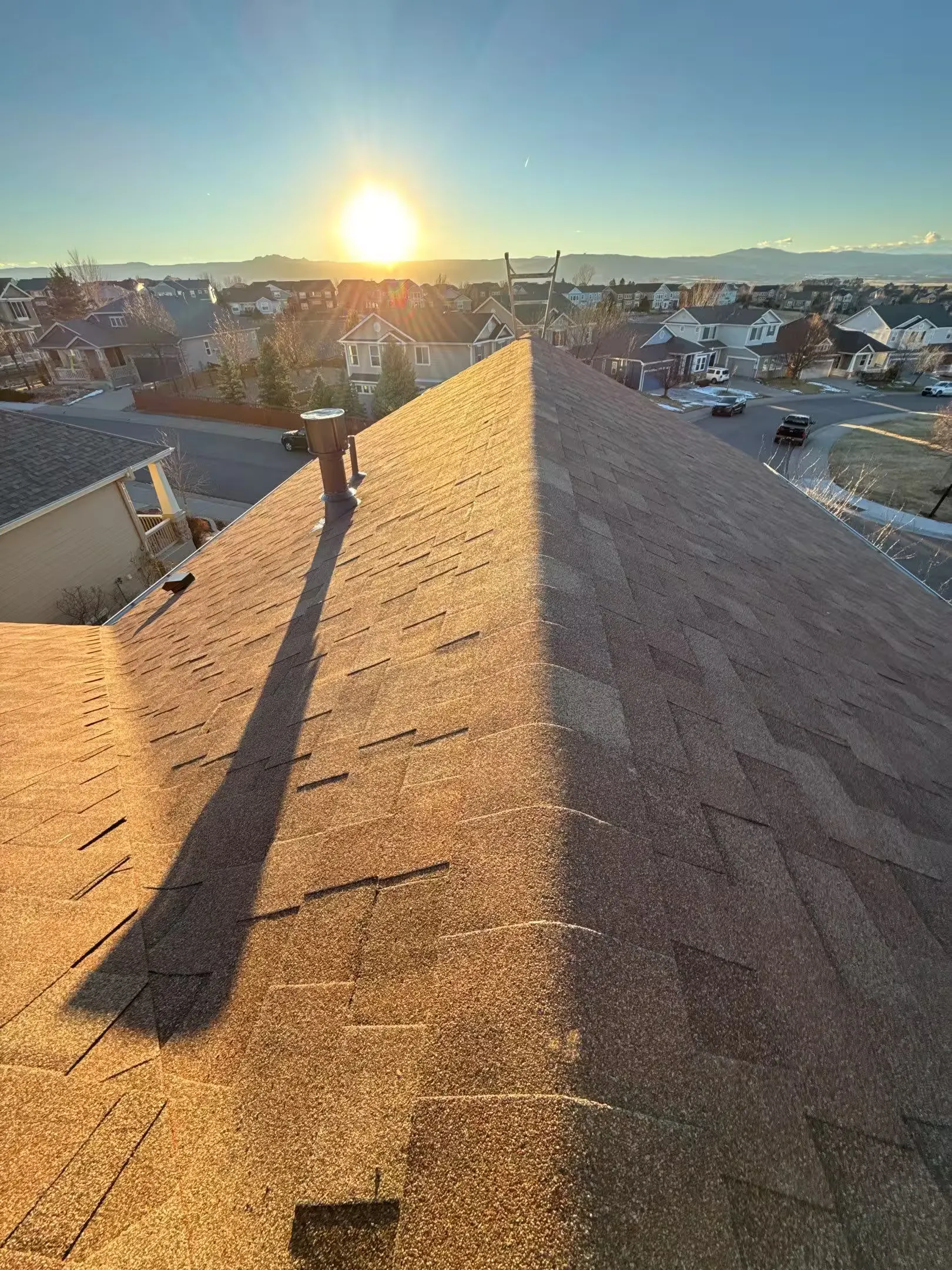
The concept is simple: intake vents near the eaves let cooler air enter the attic, exhaust vents near the ridge let heat and moisture escape. That airflow keeps the attic closer to outside temperature.
Intake Vents
Sit at or near the eaves. Allow cooler outside air to enter the attic. Most commonly soffit vents.
Common problem: blocked by insulation or undersized for the attic volume.
Exhaust Vents
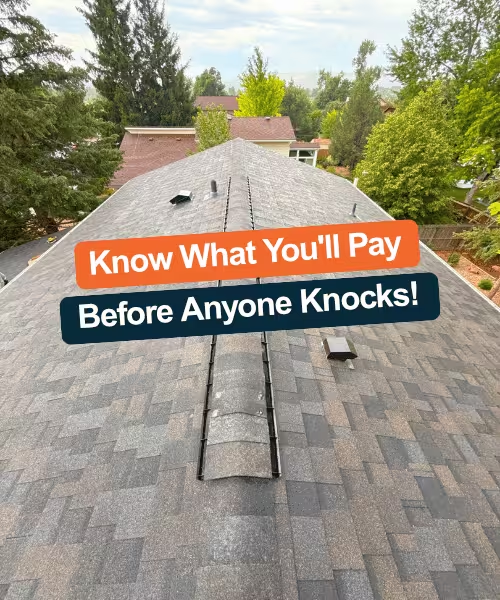
Sit higher on the roof. Let warm, moist air escape. Ridge vents, box vents, gable vents, or powered vents.
Common problem: oversized exhaust without matching intake throws balance off.
The Balance Problem
Both sides need to be balanced. Calculations are based on attic square footage and roof design. Each vent type moves a specific volume of air — using the wrong combination can actually make things worse instead of better.
How We Design It
Two-Stage Design and Verification
Good ventilation design happens in two stages, and both matter. Skipping either is how you end up with ventilation that looks right on paper but doesn't actually work.
Planning Stage
Roof measurements drive intake and exhaust requirements based on attic square footage, roof geometry, and vent performance ratings. We calculate how much airflow is needed and what vent types to use.
On-Site Verification
Once work begins, the attic is physically inspected to confirm layout, check for obstructions, and trace actual airflow paths. Some homes have multiple disconnected attic sections — each one needs its own ventilation.
Code Requirements
Attic Ventilation Code in Evergreen
Jefferson County Building Safety Division handles all permits, inspections, and code enforcement for Evergreen as an unincorporated area. The 2018 Jefferson County Residential Code Supplement applies, including Appendix Z for Wildfire Zone 1. Class A roof coverings are required at all elevations above 6,400 feet, which covers all of Evergreen.
Minimum Code vs. Best Practice
Wildfire exposure and snow load are the lead conversations in Evergreen. Class A fire rating is required, not optional, and Appendix Z for Wildfire Zone 1 governs roof covering and gutter requirements. Stone-coated steel, synthetic composite, and standing seam metal are the strongest material recommendations for the climate.
Disclaimer
This information reflects typical residential reroof requirements for Evergreen as an unincorporated area of Jefferson County. Wildfire Zone 1 designation, elevation, and site-specific conditions can affect enforcement. Contractors must verify current requirements with the Jefferson County Building Safety Division prior to permitting.
Last Verified: May 27, 2026
Permit Required
Yes.
Drip Edge
Yes. Eaves and rakes.
Ice & Water Shield
Required at eaves, extending at least 24 inches inside the exterior wall line, for asphalt shingles, metal roof shingles, mineral roll roofing, slate, wood shingles, and shakes.
Attic Ventilation
Yes.
Mid-Roof Inspection
No for asphalt shingles. Yes for low-slope roofing. Yes for specialty roofing.
Roof Overlay
Yes. Two layers permitted.
Class A Fire Rating
Yes. Required by elevation.
Final Inspection
Yes.
Attic Ventilation FAQs — Evergreen
Common questions from Evergreen homeowners.
Watch for uneven snow melt patterns on your roof, large icicles forming at the edges, attic feeling like an oven in summer, frost buildup inside the attic during winter, or shingles wearing out faster than they should. Any of these can point to ventilation imbalance.
Sometimes. Intake vents can often be added or upgraded, and exhaust can be adjusted. But if you're replacing your roof anyway, that's the time to get ventilation evaluated and optimized as part of the project.
It depends on your attic square footage, roof design, and local climate. Calculations follow ventilation ratios from the International Building Code. We evaluate your specific roof and recommend a design that fits.
Because a new roof alone doesn't fix the underlying causes. If ventilation is inadequate or insulation is poorly placed, a brand-new roof will still have ice dam problems. Getting ventilation right during a roof replacement dramatically reduces that risk.
There's no single vent type that works best for every home. A well-designed system uses a combination of intake and exhaust vents sized for the specific attic. Ridge vents only work well when paired with enough intake.
It depends on how the foam was applied. If sealed directly to the underside of the roof deck, traditional attic ventilation becomes less of a factor. Spray foam in attics has its own code and performance considerations worth discussing.
Have a specific question about your home?
Schedule an Inspection
Find Out What Your Project Will Cost
Real answers, transparent pricing, and a clear plan tailored to Evergreen.