
Pak Exteriors
Pricing Guide
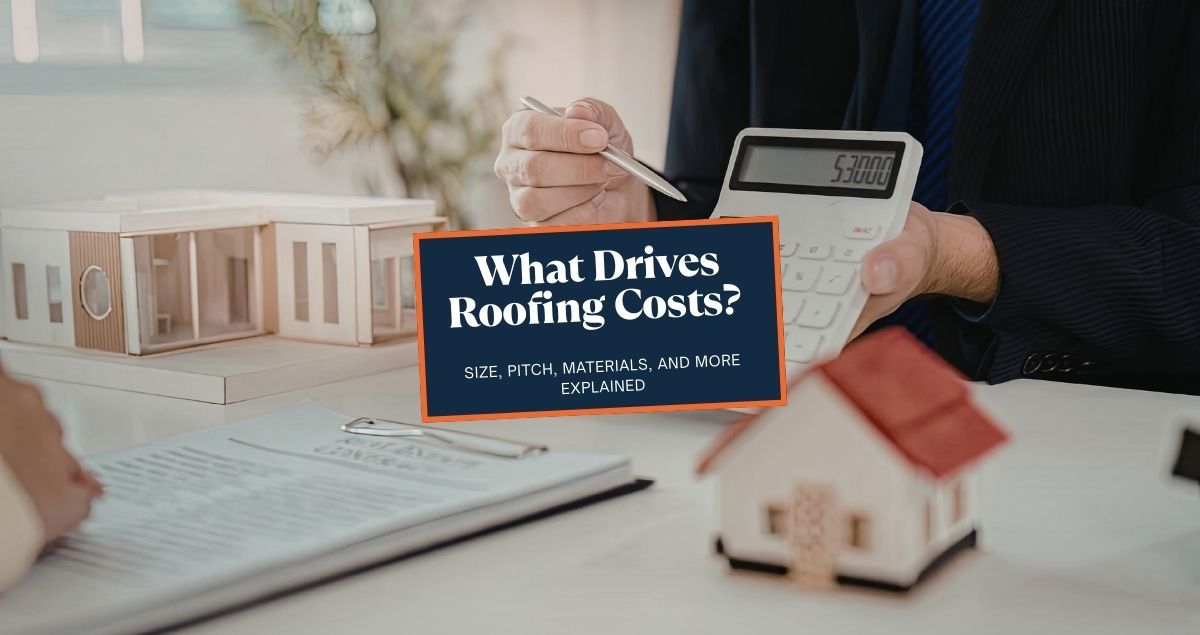
What will your roof really cost? We believe in full transparency. Here's what Colorado homeowners actually pay, broken down by material, service type, and location, so you can evaluate any quote with confidence.
Prices shown are for a typical 3,000 sq. ft. Colorado home unless otherwise noted. Ranges reflect variation in pitch, complexity, access, and whether your home is in the Denver metro or a mountain community.
Why Isn't Roofing Pricing Easy to Find?
Most contractors keep prices vague out of fear of losing business, tipping off competitors, or "too many variables." In truth, hiding prices is what makes you anxious and skeptical. So we lay it all out for you.
Material Type
Shingles, metal, tile, stone-coated steel, and advanced synthetics have different price points, features, and lifespans. Beyond the main product, accessories like underlayments, ventilation, fasteners, and flashings also vary widely in quality. Opting for premium components over economy options can significantly affect your final price.
Roof Size
The bigger your roof, the more materials and labor are needed. Most residential roofs are about 1.5 times the square footage of the main level of your home due to slope.
Slope & Complexity
Steep, multi-level, or detailed roofs, featuring skylights, dormers, chimneys, or intricate angles, take longer and require extra safety and expertise, increasing both time and cost.
Location
Costs are generally lower in accessible urban areas like Denver versus remote or mountainous regions. The city or county also influences pricing. Some municipalities require expensive permits and strict local building codes that add materials and installation steps.
Existing Conditions
Replacing a roof on older or damaged structures may involve additional work, structural repairs, tear-off of multiple layers, or special disposal needs, which add to your final investment.
How Roofing Is Priced
Roofing is priced per square foot of roof area, then scaled to your home. Take the rate for your material, multiply by your roof's size, and you have a working estimate. Mountain & Rural rates account for added logistics, travel, and delivery above the Denver metro area.
Asphalt Shingles
The most common choice in Colorado, from standard Class 3 up to impact-rated Class 4 and designer (shake-look) profiles. Class 4 impact-rated options qualify for significant insurance discounts with most carriers.
Class 3 Asphalt Shingle
per sq ft installed
per sq ft installed
Class 4 Asphalt Shingle
per sq ft installed
per sq ft installed
Premium Class 4 Asphalt Shingle
per sq ft installed
per sq ft installed
Designer Asphalt Shingle (Shake Look)
per sq ft installed
per sq ft installed
Metal Roofing
Metal roofing delivers exceptional longevity, Class 4 impact resistance, and superior performance in Colorado's freeze-thaw and UV conditions. Stone-coated steel combines steel durability with the look of traditional materials.
Stone-Coated Steel
per sq ft installed
per sq ft installed
Standing Seam Metal
per sq ft installed
per sq ft installed
Premium & Alternative Materials
Synthetic and composite materials replicate the look of natural products with enhanced durability. Concrete and clay tile are extremely durable and fire-resistant. Structural evaluation required due to weight.
Synthetic / Composite
per sq ft installed
per sq ft installed
Concrete or Clay Tile
per sq ft installed
per sq ft installed
Flat & Low-Slope Roofing
Commercial-grade membranes for low-slope and flat sections. Often combined with steep-slope systems on residential homes with mixed geometry.
EPDM / TPO / PVC Flat/Low Slope
per sq ft installed
per sq ft installed
Modified Bitumen Flat/Low Slope
per sq ft installed
per sq ft installed
Fluid Applied Membrane
per sq ft installed
per sq ft installed
Typical Pricing for a Single-Family Home
Every total below is for a 3,000 sq ft single-family roof — the size we use as a baseline so the numbers stay comparable. Your actual quote scales with your roof's real size, pitch, and complexity.
Asphalt Shingles
The most common choice in Colorado, from standard Class 3 up to impact-rated Class 4 and designer (shake-look) profiles. Class 4 impact-rated options qualify for significant insurance discounts with most carriers.
Class 3 Asphalt Shingle
for a 3,000 sq ft roof
for a 3,000 sq ft roof
Class 4 Asphalt Shingle
for a 3,000 sq ft roof
for a 3,000 sq ft roof
Premium Class 4 Asphalt Shingle
for a 3,000 sq ft roof
for a 3,000 sq ft roof
Designer Asphalt Shingle (Shake Look)
for a 3,000 sq ft roof
for a 3,000 sq ft roof
Metal Roofing
Metal roofing delivers exceptional longevity, Class 4 impact resistance, and superior performance in Colorado's freeze-thaw and UV conditions. Stone-coated steel combines steel durability with the look of traditional materials.
Stone-Coated Steel
for a 3,000 sq ft roof
for a 3,000 sq ft roof
Standing Seam Metal
for a 3,000 sq ft roof
for a 3,000 sq ft roof
Premium & Alternative Materials
Synthetic and composite materials replicate the look of natural products with enhanced durability. Concrete and clay tile are extremely durable and fire-resistant. Structural evaluation required due to weight.
Synthetic / Composite
for a 3,000 sq ft roof
for a 3,000 sq ft roof
Concrete or Clay Tile
for a 3,000 sq ft roof
for a 3,000 sq ft roof
Flat & Low-Slope Roofing
Commercial-grade membranes for low-slope and flat sections. Often combined with steep-slope systems on residential homes with mixed geometry.
EPDM / TPO / PVC Flat/Low Slope
for a 3,000 sq ft roof
for a 3,000 sq ft roof
Modified Bitumen Flat/Low Slope
for a 3,000 sq ft roof
for a 3,000 sq ft roof
Fluid Applied Membrane
for a 3,000 sq ft roof
for a 3,000 sq ft roof
Need a number for your specific home?
These are ranges, your actual quote depends on your roof. We'll measure and price it precisely, for free.
How Much Does a Roof Repair Cost?
Not every roofing problem requires a full replacement. Here's what targeted repairs typically cost in Colorado, and what each one includes.
Damaged Shingles
Repairing damaged shingles typically starts at about $500 for smaller areas. When damage covers a larger section, the cost can increase into the several-thousand-dollar range depending on how many shingles need replacing and the complexity of the repair.
- Material and labor
- Matching shingle sourcing
- Visual inspection of surrounding area
Hole Patch
If a tree or critter creates an opening in your roof, you'll need a hole patch. Smaller patches start around $750 in Denver and $1,250 in mountain communities. When the damaged area is larger or surrounding decking needs repair, costs can reach $2,000 in Denver and $3,000 in the mountains.
- Full waterproof patch
- Decking repair if needed
- New matching surface material
Skylight Replacement
Standard skylights run about $1,800 in Denver and $2,200 in mountain communities. Specialty skylights range from $2,700–$3,700 in Denver and $3,200–$4,200 in the mountains. Very large or fully custom skylights can cost significantly more.
- Skylight unit and installation
- New curb and flashing
- Interior trim and finishing
Sagging Roof
If your roof is sagging, you may need damaged wood replaced or rafters repaired. Smaller areas start around $750 in Denver and $1,250 in mountain communities. Larger sections or rafter repairs range from $2,000–$3,000 in Denver and $2,500–$4,000 in the mountains.
- Structural assessment
- Rafter or decking repair
- New surface materials over repaired section
Chimney Leak
Chimney leaks often indicate flashing needs replacement. A full re-flash starts around $1,800 in Denver and $2,300 in mountain communities. When the chimney is large or there is extensive rot, repairs can reach $5,000 in Denver and $6,500 in the mountains.
- Complete flashing tear-out
- New step and counter flashing
- Sealant and waterproofing
Flashing Repairs
If you're seeing a leak around a dormer, skylight, or where the roof ties into a wall, a flashing repair is often the solution. Denver repairs range $600–$2,000; mountain communities run $1,100–$2,500, depending on how much flashing needs replacing and whether siding must be removed.
- Inspection and diagnosis
- Flashing removal and replacement
- Waterproof sealing
How Much Does Roof Maintenance Cost?
Regular maintenance extends roof life and catches minor issues before they become expensive. Here's what to expect.
One-Time Service
$350 – $500
If it's been a while since your roof was inspected, it's probably time for a tune-up. A proper roof tune-up includes sealing exposed nails, clearing small debris, and providing a full photo inspection report. About $350 in Denver and $500 in mountain communities.
- Full photo inspection report
- Sealing of exposed nails
- Clearing small debris
- Minor sealant touch-ups at penetrations
- Written condition summary with repair recommendations
Annual Maintenance Plan
$250 – $350 / year
An annual maintenance plan lets you schedule care in advance and save money at the same time. With a three-year commitment, expect around $250/year in Denver and $350/year in mountain communities. Preferred clients receive priority scheduling and discounted repair rates.
- Two inspections per year (spring + fall)
- Priority scheduling after storm events
- Discounted repair rates (10–15% off)
- Digital inspection history on file
- Proactive warranty protection documentation
- Direct line to your assigned crew lead
Begin Your Roofing Project in 3 Simple Steps
From first call to completed project, here's what working with Pak looks like.
Talk Through Your Project
Start by reaching out. Give us a call or use the contact form below. You'll connect with a Pak Exteriors team member who will follow up to learn about your roof and schedule a time to visit.
Compare Options and Packages
We'll come out for a thorough inspection and walk you through what we find. After the on-site assessment, you'll get a clear, detailed estimate for your roof work.
Move Forward When It Makes Sense
Once you sign your proposal and share your vision, we'll get started. Most projects begin within 1–3 weeks. You'll get peace of mind knowing your roof is well taken care of and your home protected.
Contact Us
Latest From the Blog

Don't Take Our Word For It
“Eric and his outstanding team @ Pak Roof did a great job helping us resolve our gutter flashing and heat tape problems! Eric put us on his schedule promptly and identified the issues, then, working with the best resources, got the project done in short order. Everyone involved was professional, timely and easy to communicate with.”

Debby Larson
Verified Google Review“Eric at Pakroofs stepped in and pulled me out of a frustrating situation I found myself in an untrustworthy public adjuster firm. From our first conversation, he brought clarity, professionalism, and a genuine willingness to help. His roofing team was nothing short of outstanding—true professionals who completed the entire roofing job in just one day, with minimal disruption and impressive attention to detail.”

Shihan Qu
Verified Google Review“Tyler was super easy to work with and helped us understand our options when it came to replacing our roof following hail damage. He worked closely with our insurance to ensure everything was handled properly. He also helped with key upgrades like class 4 shingles and proper roof venting to help keep our upstairs cooler in the summer!”

Katie Barends
Verified Google ReviewEverything You Need to Know About Roof Pricing
Honest answers organized by topic, so you can find exactly what you're looking for without scrolling through a wall of text.
It depends on material type, roof size, pitch, complexity, location, and existing conditions. The pricing tables above show current ranges for each material type based on a 3,000 sq ft roof, broken out by Denver and mountain communities. Those ranges reflect complete system installations, not just the visible roofing product. That includes underlayment, flashing, ventilation, ice and water protection, permits, and cleanup. For a number specific to your home, the Instant Roof Estimator uses aerial measurements and Colorado-specific data to generate a personalized budgeting range.
Roofing is priced per square, not per square foot. One roofing square equals 100 square feet of roof surface. Per-square pricing accounts for the full installed system: underlayment, flashing, ventilation work, labor, safety setup, and disposal. If you see pricing listed per square foot somewhere else, multiply by 100 to convert to per-square pricing for a direct comparison. The pricing tables on this page are based on total project cost for a typical 3,000 sq ft roof, the most practical way for homeowners to compare options.
The roofing system and installation conditions drive cost more than the visible roofing product. Here's what moves the number the most, roughly in order of impact:
- Material type and component quality, within each category, the quality of underlayment, ventilation, fasteners, and flashing also affects price
- Roof size, most residential roofs are about 1.5× the square footage of the home
- Slope and complexity, steep pitches, dormers, skylights, chimneys, and intricate angles all increase time and cost
- Location, Denver and surrounding areas are generally more accessible and less expensive than mountain and rural communities
- Existing conditions, additional layers, damaged decking ($60–$80/sheet to replace), structural repairs, or special disposal needs
Colorado's climate adds another layer. Hail resistance, snow load performance, UV exposure at elevation, and wind uplift requirements influence installation methods in ways that don't apply in milder states.
Most aren't accurate enough for real budgeting. National calculators based on home size and zip code miss too many variables to be reliable for an individual home. They typically don't account for slope, complexity, ventilation condition, flashing requirements, existing layers, decking health, component quality choices, or local code requirements. Those are the factors that actually determine cost. The pricing on this page is based on Colorado-specific installation data. For a number tailored to your actual home, the Instant Roof Estimator applies aerial measurements to generate a personalized range. Our Our Work section shows what similar Colorado homes actually cost, with real pricing and scope details.
Yes. An experienced contractor can provide a reasonably narrow price range using aerial measurements, satellite imagery, and local cost knowledge. The Instant Roof Estimator generates a realistic planning range from home without scheduling anything. Inspections confirm conditions that aren't visible remotely, hidden layers, decking condition under existing roofing, ventilation performance, or access limitations. On most single-family homes, the inspection refines pricing. It doesn't create it from scratch.
Yes. Knowing your realistic price range first makes the material decision more practical and less overwhelming. The gap between an architectural asphalt shingle roof and a standing seam metal roof is significant. If you pick a material before understanding that spread, you risk falling in love with something that doesn't fit your budget. The clearest path: (1) Start with pricing using the Instant Roof Estimator, (2) narrow your materials with the Roof Selector Quiz, and (3) see real examples in our Our Work section. Pricing first, materials second, real-world examples third.
Colorado's climate demands a heavier-duty installation than most of the country. Severe hail, heavy snow loads, rapid freeze-thaw cycles, high-elevation UV, and wind-driven precipitation all require upgraded protection layers, impact-resistant materials, and fastening methods designed for long-term durability. In practice, that means more ice and water barrier, heavier underlayment, wind-rated fastening patterns, and ventilation systems engineered to manage both summer heat and winter moisture. Mountain communities add steeper pitches, access challenges, and snow load requirements on top of that. These aren't upgrades. In Colorado, they're baseline requirements for a roof that holds up.
Because a roof is a system, not just a visible surface. When ventilation is wrong, the rest of the system pays for it, often in ways that don't show up for years. In Colorado, an imbalanced ventilation system is one of the leading contributors to premature shingle failure, condensation damage, mold, decking rot, ice dams, and unnecessary HVAC strain.
Common problems found during tear-off:
- Inadequate or blocked soffit intake
- Ridge vent installed without enough intake to function
- Mixed exhaust components that compete instead of complement
- Cathedral or vaulted areas that were never ventilated correctly
Ventilation also affects manufacturer warranty compliance. Improper airflow can void material warranties even when shingles are installed perfectly. Our Attic Ventilation page explains how proper airflow is calculated and why it matters.
Because contractors aren't always proposing the same system. Price differences usually trace back to scope, engineering approach, and contingency planning. Here's what that looks like side by side:
| Category | Complete System Proposal | Minimal Proposal |
|---|---|---|
| Flashing | Full replacement at all walls and penetrations | Reuse existing where possible |
| Ventilation | Assessed and corrected as needed | Left as-is unless requested |
| Ice & Water Protection | Beyond code minimum where exposure warrants | Code minimum only |
| Decking | Defined allowance with per-sheet pricing ($60–$80/sheet) | Addressed if found, pricing TBD |
| Permits | Included in proposal | Homeowner responsibility or not mentioned |
| Component Quality | Premium underlayment, fasteners, flashing options defined | Economy or unspecified components |
Both proposals may call themselves "roof replacements." They're not equivalent systems, and the price gap between them is usually justified by real differences in what you're getting. See Our Work for completed proposals with transparent pricing and scope breakdowns.
An unusually low quote isn't automatically a red flag, but it deserves a closer look. Significant pricing gaps usually trace back to scope, insurance compliance, or business viability.
- Incomplete scope, some proposals exclude ventilation corrections, flashing replacement, code-required upgrades, permits, or defined decking allowances. Those items often reappear as change orders once work starts.
- Insurance classification differences, properly insured contractors carry trade-specific liability and workers' compensation coverage. Some companies operate under incorrect classifications, which lowers their overhead but increases your risk.
- Limited infrastructure, very small or newly formed companies may operate with minimal project management and limited service staff, affecting scheduling, communication, and long-term warranty support.
The highest quote isn't automatically the best choice either. But unusually low pricing deserves a careful look at what's included, what's not, and whether the company can sustain its commitments.
Comparing totals instead of comparing scope. Two proposals can look similar on paper but represent very different levels of protection and accountability.
- Comparing bottom-line numbers without reading the scope. Confirm whether the estimate includes full flashing replacement, ventilation corrections, ice and water protection, permits, decking allowances, and multi-layer removal
- Not verifying insurance and trade classification. Request a certificate of insurance and call the broker to confirm the company is classified for roofing (dora.colorado.gov can verify coverage status)
- Signing vague contracts. Contracts with open-ended "plus supplements" language without defined scope create problems later
- Ignoring business stability. A workmanship warranty is only as strong as the company behind it
- Not looking at real completed projects. Context makes it much easier to evaluate proposals
Yes. Regional demand spikes after large storms, and that affects labor costs, scheduling, material availability, and project timelines. After a significant hail event, demand for roofing labor increases sharply, scheduling tightens, and insurance claim volume rises. Some of that price movement reflects real operational costs like overtime and increased project management. That said, be cautious of extreme urgency messaging immediately after storms. Not every roof needs same-week replacement, and pricing should still be transparent and explainable. Our Insurance Claim Support page explains how storm-related pricing works and what to expect during high-volume periods.
Shorter than the number on the packaging, in most cases. Here are realistic expectations based on what we see across the Front Range and mountain communities:
- Standard architectural asphalt shingles: 15 to 25 years depending on storm history
- Impact-resistant asphalt shingles: 20 to 35 years depending on hail frequency
- Stone-coated steel and premium synthetics: 30 to 50 years depending on product
- Standing seam metal roofing: 40+ years with proper installation
Material type matters, but installation quality, ventilation performance, storm frequency, and exposure conditions often matter more. Storm exposure is usually the deciding factor. A roof that could physically last 30 years may need replacement earlier because of hail damage, not material failure.
It's a protection decision first. A return-on-investment calculation second. Your roof protects framing, insulation, drywall, flooring, and everything inside the home. When a roof fails, interior damage costs often exceed the replacement cost itself. From a resale standpoint, a newer roof improves buyer confidence and reduces negotiation pressure. Homes with aging roofs commonly see price reductions, seller concessions, longer days on market, and buyer hesitation at inspection. That said, if your roof still has meaningful service life and no active issues, immediate replacement may not create proportional value, monitoring or targeted repair might be more responsible. When done at the right time for the right reasons, it's a stabilizing investment. Not a speculative one.
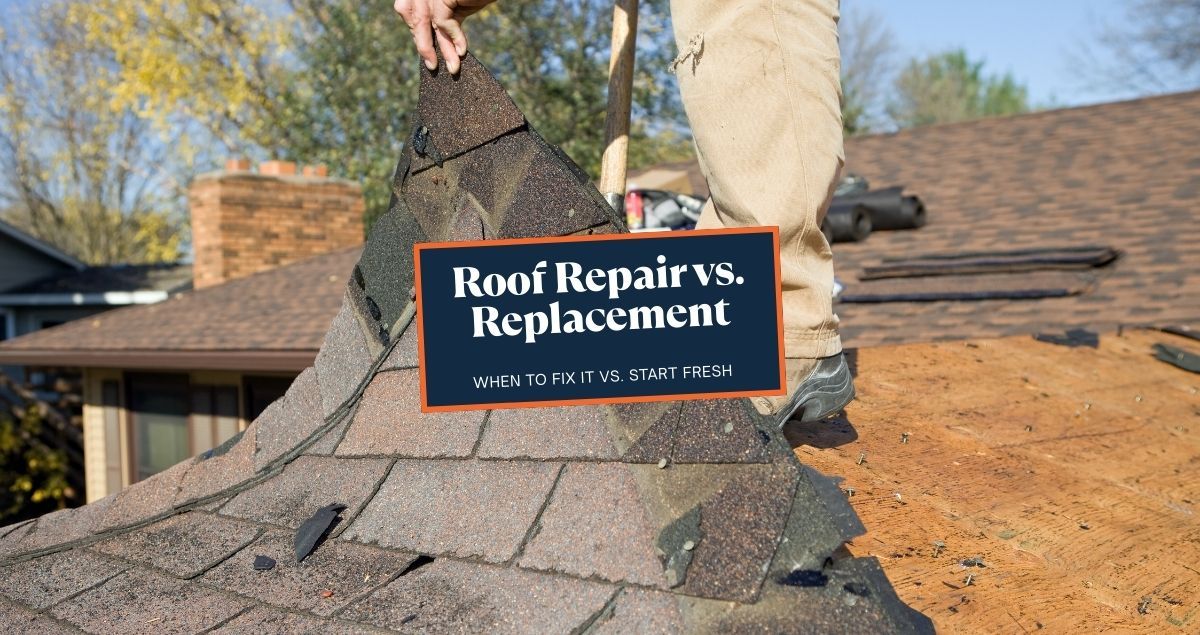
When the damage is localized and the system still has meaningful life remaining. Not every roof needs replacement, and a good contractor should tell you that. Replacement makes sense when damage is widespread, the system has reached the end of its functional life, or ongoing repairs would cost more than replacement over a reasonable timeframe. But if you're dealing with isolated damage on an otherwise sound roof, full replacement could be premature and a waste of money. The repair pricing section on this page gives you a sense of what targeted fixes cost. The Repair vs Replacement Quiz walks you through the key factors to help you evaluate which direction makes sense.
If storm damage meets your policy requirements, insurance typically covers restoring the roof to pre-loss condition. You choose the contractor, approve the scope, and control the timeline. The insurance company determines coverage, but the decisions about your property are yours. For a detailed walkthrough of how the claims process works, visit our Insurance Claim Support page. The Colorado Division of Insurance (dora.colorado.gov) also provides homeowner resources on filing claims and understanding your rights.
Expect a transparent scope of work with clearly defined pricing, regardless of whether insurance is involved. Watch for contracts that request authorization based only on insurance proceeds, include vague "plus supplements" language without defined scope, or avoid showing you itemized pricing. You should understand what work is being performed and what it costs before you sign. The pricing on this page gives you a realistic baseline to compare against. Our Insurance Claim Support page covers how insurance pricing is structured and what to watch for.
Sometimes, yes. Repair may be appropriate when damage is limited to specific areas and the roofing system still has meaningful lifespan remaining. The decision depends on how widespread the damage is, the age and condition of the existing system, and whether repair would realistically extend the roof's service life or just delay an inevitable replacement. The repair pricing section on this page shows typical costs for common repairs. The Repair vs Replacement Quiz helps you work through the bigger question of which direction makes sense for your situation.
Sometimes, but significant surprises are uncommon on standard homes when pricing is prepared carefully. The most common mid-project adjustments are decking replacement ($60 to $80 per sheet when damaged sheathing is discovered after tear-off) or removal of additional roofing layers that weren't visible during inspection. A well-structured contract defines these possibilities upfront with clear pricing. If your proposal doesn't spell out how common contingencies are handled before work starts, ask about it before signing.
A good contractor should give you meaningful pricing guidance early. The inspection confirms details, it shouldn't be the first time you hear a number. Inspections verify conditions that can't always be confirmed remotely: hidden layers, decking condition underneath existing roofing, ventilation performance, or access limitations. On most single-family homes, completely unforeseen conditions are relatively uncommon. If a contractor won't discuss pricing at all until they're on-site, that's worth noting. The pricing on this page and the Instant Roof Estimator both exist because we believe homeowners should have real numbers before anyone shows up at the door.
The contractor you choose matters more than the material you choose. A professional company should welcome every one of these questions.
- What exactly is included in your scope of work? (Get underlayment, flashing, ventilation, permits, cleanup, and component quality defined)
- Are you properly insured and classified as a roofing contractor? (Request certificates and call the broker to confirm)
- How do you evaluate ventilation, are intake and exhaust airflow measured as part of the estimate?
- How are unforeseen conditions handled? (A professional proposal defines decking costs at $60–$80/sheet upfront)
- Who is actually installing my roof, employees or subcontractors?
- What warranties apply, and who services them? (A warranty is only as strong as the company behind it)
- Can you explain pricing before I commit? (Avoid agreements based on insurance proceeds alone with undefined scope)
We're not the right fit for every homeowner or every project. Here are situations where someone else might serve you better:
- You're looking for the absolute lowest price. We price complete systems with defined scope, proper insurance, and long-term warranty support. If bottom-line cost is the only factor, a smaller operation with lower overhead may be a better match.
- Your project is outside our service area. We serve Colorado's Front Range and mountain communities with active licenses in Summit, Eagle, Garfield, and Grand County.
- You need emergency tarping or same-day turnaround. We focus on planned, full-system replacements.
- You want a contractor who will just match your insurance estimate without questions. We scope projects based on what the home actually needs, which sometimes differs from the initial insurance estimate.
Being upfront about fit saves everyone time. If we can help, we will. If we're not the right match, we'd rather say so early.
Before you call any contractor, do these three things. They take about 15 minutes and put you ahead of most homeowners:
- Understand your budget range. The Instant Roof Estimator gives you a home-specific number using aerial measurements and Colorado installation data
- Figure out what matters most to you. The Roof Selector Quiz helps you evaluate which roofing systems match your ownership timeline, storm exposure, and maintenance priorities
- See what real projects actually cost. Browse completed installations in our Our Work section with real pricing, real scope, and real homes across Colorado
You'll know what to expect, what to ask, and what to look for. Start with the estimator, then take the Roof Selector Quiz, then see Our Work.
Still have a question not covered here?
Ask Us Directly
Find Out What Your Roof Will Cost
Get a ballpark price range based on your home and location. No obligation, no pressure.