

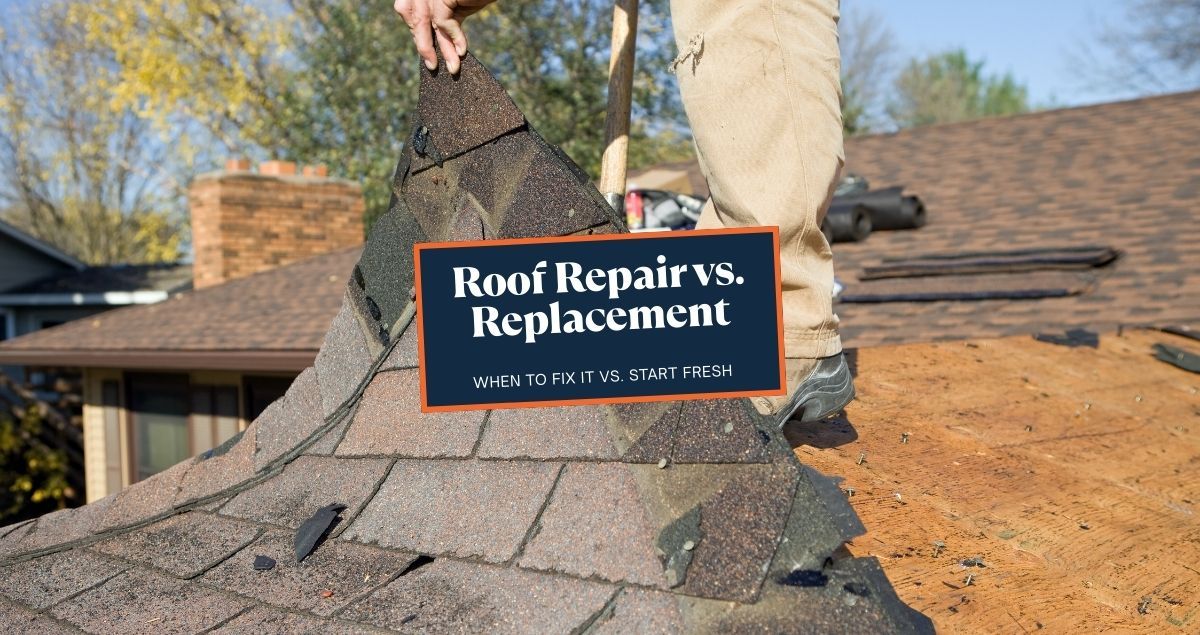

One of the most common and stressful questions homeowners ask is, “Does my roof need a full replacement, or can I just repair the damaged areas for now?” It is a fair question. Roof replacement is a major investment, and no homeowner wants to replace a roof prematurely. At the same time, repairing a roof that has already reached the end of its service life often leads to repeated leaks, wasted money, and frustration.
In this guide, we walk through how to think about roof repair versus replacement, what factors actually matter, and how homeowners can get clarity without guessing. We will also point out when a quick assessment tool, like our Roof Repair vs. Replacement Quiz, can help you decide your next step in under two minutes.
Why This Decision Is Not as Simple as It Sounds
TLDR: Repair makes sense for isolated damage on newer roofs. Replacement makes sense when damage is extensive or the roof is near end of life. A professional assessment prevents costly repairs on roofs that actually need replacing.
From the ground, many roof problems look similar. A missing shingle, a small leak, or visible hail marks might seem minor. But surface symptoms do not always reflect what is happening underneath the roofing system.
The right answer depends on a combination of factors, not just the visible damage. Age, material condition, roof design, prior repairs, and the type of damage all matter. Two homes with similar-looking issues may need completely different solutions.
In many cases, homeowners default to repairs not because they are the best solution, but because replacement feels financially out of reach at the moment.
When Roof Repair Usually Makes Sense
Roof repair is often the right choice when damage is isolated, limited, and the roof still has meaningful life left.
Common situations where repair may be appropriate include:
- A small number of wind-damaged or missing shingles
- Minor flashing issues around a chimney or vent
- Localized damage from a fallen branch
- A relatively new roof with a single problem area
If your roof is newer, generally performing well, and the issue can be corrected without disturbing large sections of the system, repair can be a smart and cost-effective option.
That said, some homeowners choose repairs simply to manage short-term cost, even when replacement may be the better long-term solution. In those situations, working with a contractor who offers financing can sometimes change the math and make replacement a realistic option instead of a temporary fix.
When Roof Replacement Becomes the Smarter Move
Replacement tends to make more sense when problems are systemic rather than isolated.
Signs that replacement may be the better option include:
- The roof is nearing or past its expected service life
- Widespread hail damage across multiple slopes
- Repeated leaks in different areas
- Prior repairs that are failing or stacking up
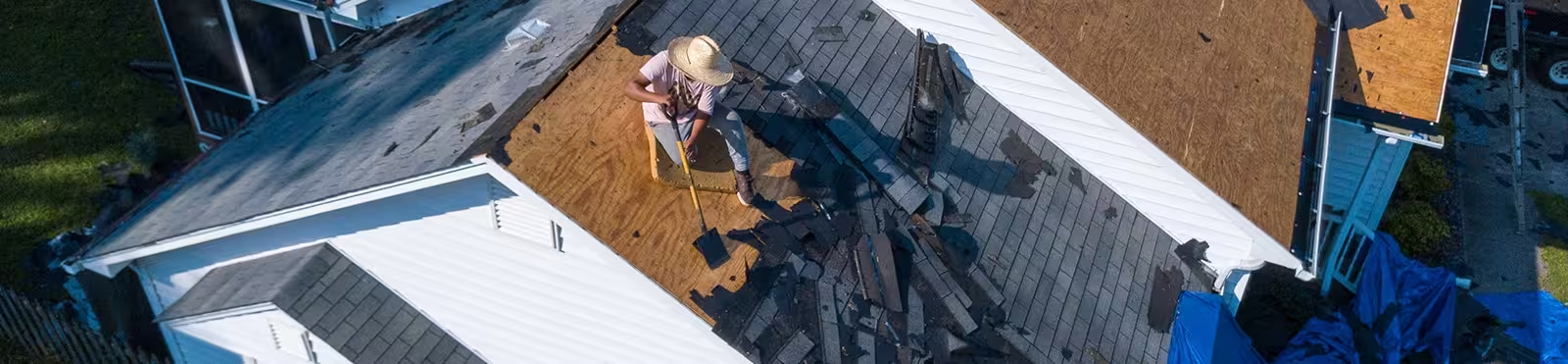
- Granule loss, brittle shingles, or exposed mat
At a certain point, repairs stop extending the life of the roof and start acting as temporary band-aids. When repair costs accumulate or when underlying materials are compromised, replacement is often more economical long-term.
For some homeowners, the deciding factor is not whether replacement makes sense, but whether it feels affordable. Financing options can allow homeowners to move forward with a full replacement when ongoing repairs would otherwise delay the inevitable.
Insurance Reality in Colorado That Affects This Decision
In Colorado, insurance considerations increasingly influence whether repair is even a viable option.
Many carriers are now eliminating or significantly reducing roof coverage once a roof reaches 10 years of age, even if the roof is still technically repairable. In these cases, insurers may only offer actual cash value coverage or exclude the roof entirely moving forward.
In mountain and high-risk fire zones, there is an additional layer of complexity. Roofs of similar age that are not Class A fire-rated are often being mandated for replacement by insurance carriers, regardless of whether they could be repaired.
Because of these changes, homeowners sometimes face a decision where replacement improves insurability and long-term coverage, even if repairs appear less expensive in the short term.
Age Alone Is Not the Whole Story
Homeowners often assume age is the deciding factor, but that is only partially true.
A 10-year-old roof with severe hail damage may need replacement, while an older roof that has been well maintained may still be repairable. Material quality, installation quality, ventilation, and exposure all influence how a roof ages.
Financial flexibility, including financing availability, can also play a role in determining whether homeowners address the problem fully or in stages.
Why Spot Repairs Can Sometimes Backfire
One common mistake homeowners make is approving repeated spot repairs on an aging roof. Each individual repair might seem reasonable, but over time:
- Repair costs add up
- New shingles do not blend or seal well with old materials
- Leaks move to new areas
- Warranty coverage becomes unclear
In these cases, money spent on repairs could have been applied toward a replacement that actually solves the problem. Financing can help bridge that gap and prevent repeated spending on short-term fixes.
How Our Repair vs. Replacement Quiz Helps
Many homeowners are not ready to schedule an inspection, but they still want clarity. That is exactly why we built our Roof Repair vs. Replacement Quiz.
The quiz walks you through a short series of questions about:
- Roof age
- Type of damage
- Leak history
- Prior repairs
- Visible symptoms
It takes less than two minutes to complete and gives homeowners a realistic, experience-based recommendation on whether repair or replacement is more likely based on their answers.
If the quiz points toward replacement but budget concerns are the primary hesitation, reviewing financing options can be a helpful next step.
Why “Wait and See” Is Rarely a Strategy
Some homeowners choose to delay the decision entirely, hoping the problem resolves itself or does not get worse. Unfortunately, roofing issues almost never improve on their own.
Small problems often grow quietly. Moisture intrusion, compromised underlayment, and ventilation issues can cause damage long before it becomes visible inside the home.
Having access to financing, along with clear information, allows homeowners to make proactive decisions instead of reactive ones.
Final Thoughts
The question “repair or replace” does not have a one-size-fits-all answer. It depends on the condition of your roof, the type of damage present, insurance considerations, and your long-term goals for the home.
In many cases, financing availability is what allows homeowners to choose the best solution rather than the cheapest short-term option.
If you are unsure where your situation falls, starting with our Roof Repair vs. Replacement Quiz is a fast, low-pressure way to get direction. From there, understanding repair costs, replacement costs, and financing options can help you make a confident, informed decision.
Clear information leads to better decisions, and better decisions protect both your home and your budget.