


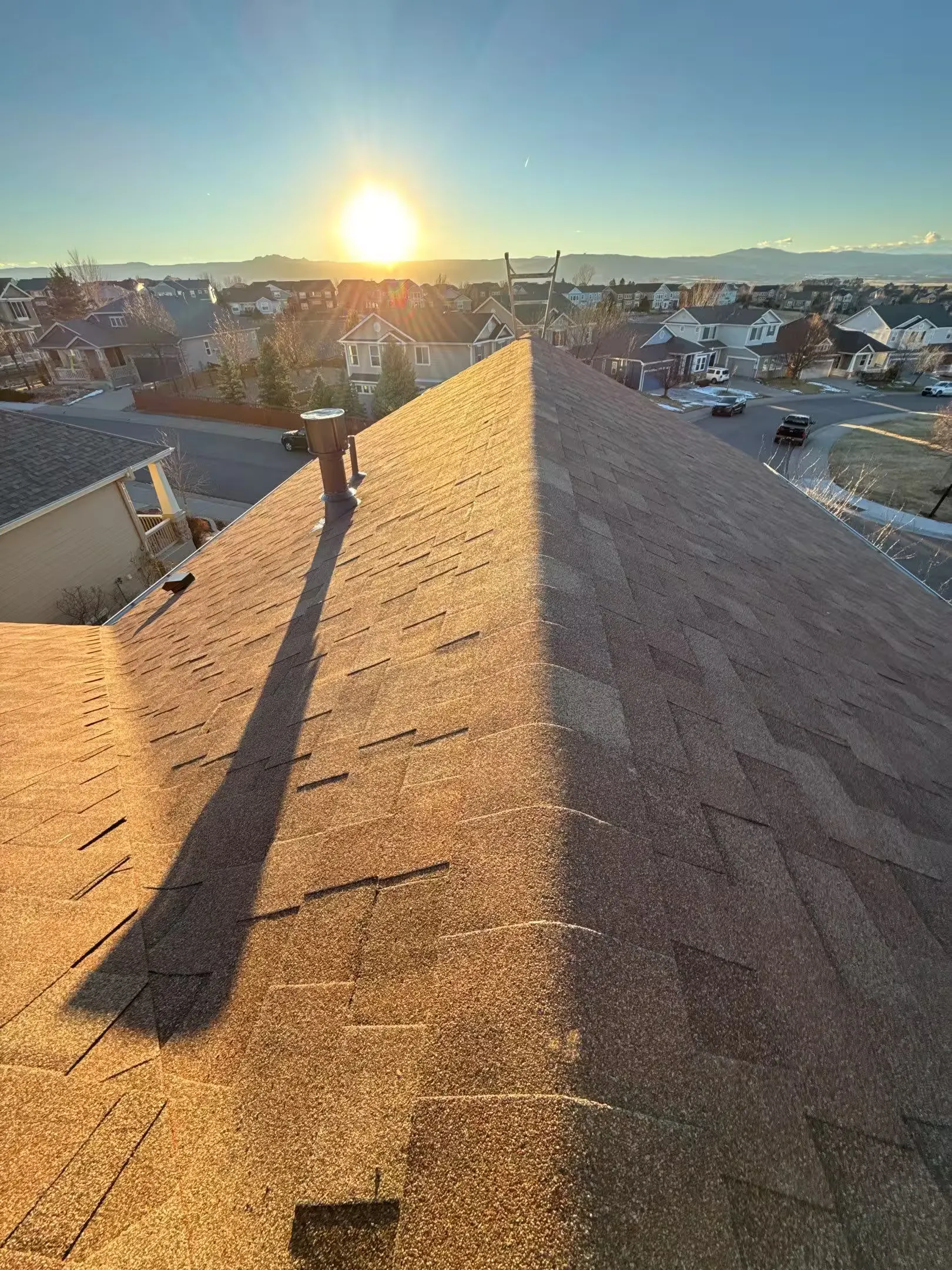



Ice Dam Prevention
in Colorado.
Most homeowners in Colorado misunderstand how ice dams actually form and, more importantly, how they're best managed. Ice dams are not caused by snow alone, they're caused by how heat and water move across a roof during freeze–thaw cycles.
Ice dam risk can be reduced significantly by focusing on two systems that work together to control heat and water flow: attic ventilation and heat cable systems.
The Two Systems That Control Ice Dams
Ice dam prevention isn't a single product. It's a design problem. Addressing it properly means understanding both systems that influence how heat and water behave on your roof.
Proper Attic Ventilation
Many Colorado homes are not ventilated as effectively as they could be. Often there is limited intake airflow, or the exhaust side isn't balanced to match. A well-designed attic allows for consistent air exchange, helping roof temperatures stay more uniform.
When an attic traps warm air, that heat warms the roof deck from below and melts snow above it. As meltwater moves down the roof and reaches colder eave areas, it refreezes. Over time, this buildup can force water under shingles and into the home during warming periods.
Proper ventilation helps create a balanced flow of cool air entering through intake vents and warm air exiting through exhaust vents. This balance reduces uneven roof warming and lowers one of the primary contributors to ice dam formation.
For homeowners who want more detail
Our Attic Ventilation Series Guide breaks down how ventilation is designed, how it's calculated, and why many homes in Colorado struggle with it.
Read the Attic Ventilation GuideProfessionally Designed Heat Cable Systems
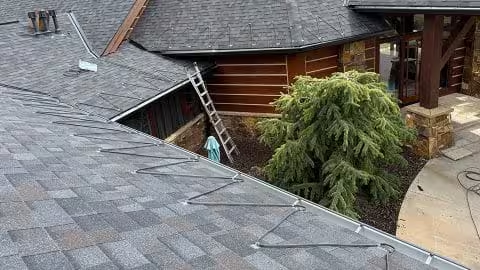
Heat cables are common in Colorado, but results vary widely based on design and layout. Systems that are underpowered or improperly placed can melt snow in the wrong areas and unintentionally increase runoff toward freezing edges.
A properly designed heat cable system focuses on creating controlled melt paths that allow water to exit the roof or gutter system more reliably. In many cases, this includes not only roof edges and valleys, but also heated gutters and downspouts so meltwater continues moving off the roof instead of refreezing downstream.
If you're considering heat cables as part of your solution, our Heat Cable System Price Guide explains typical pricing ranges, what affects cost, and how system design impacts performance in Colorado conditions.
Pricing transparency
Understand what a quality installation costs, what's often missing in low-bid installs, and how to evaluate quotes accurately.
See the Heat Cable Price GuideThe Result
When attic ventilation is properly balanced and a heat cable system is designed to manage runoff where needed, the conditions that lead to ice dams are greatly reduced. The difference comes down to understanding how heat and water behave on a specific roof and designing systems accordingly.
Ice dams can never be eliminated under all conditions, especially during extreme or prolonged weather events. But with the right design approach, their frequency and severity can often be reduced dramatically.
↓ 80%
Reduction in ice dam frequency with proper ventilation design
2 Systems
Work together, ventilation and heat cable are complementary
Season-Long
Protection from Colorado's freeze-thaw cycles
Schedule Your Ice Dam Prevention Inspection
If you're seeing ice buildup along roof edges or experiencing leaks during winter, it's worth understanding what's driving it. A proper evaluation looks at ventilation, roof design, insulation, and drainage patterns together.
Schedule a no-pressure consultation to review your home and understand what's contributing to ice dams, what options exist, and what approach makes the most sense for your roof.
Don't Take Our Word For It
“Eric and his outstanding team @ Pak Roof did a great job helping us resolve our gutter flashing and heat tape problems! Eric put us on his schedule promptly and identified the issues, then, working with the best resources, got the project done in short order. Everyone involved was professional, timely and easy to communicate with.”

Debby Larson
Verified Google Review“Eric at Pakroofs stepped in and pulled me out of a frustrating situation I found myself in an untrustworthy public adjuster firm. From our first conversation, he brought clarity, professionalism, and a genuine willingness to help. His roofing team was nothing short of outstanding—true professionals who completed the entire roofing job in just one day, with minimal disruption and impressive attention to detail.”

Shihan Qu
Verified Google Review“Tyler was super easy to work with and helped us understand our options when it came to replacing our roof following hail damage. He worked closely with our insurance to ensure everything was handled properly. He also helped with key upgrades like class 4 shingles and proper roof venting to help keep our upstairs cooler in the summer!”

Katie Barends
Verified Google ReviewIce Dam Prevention FAQs, Colorado
Straight answers to the questions Colorado homeowners ask most about ice dam prevention.
Ice dams are not caused by snow alone. They form when heat escapes into the attic, warms the roof deck, and melts snow unevenly. As that meltwater flows downward and reaches colder roof edges, it refreezes. Over time, this repeated freeze-thaw cycle builds up ice that traps additional water behind it. The root issue is heat movement and water flow, not just snow accumulation.
Improving attic ventilation can significantly reduce one of the main contributors to ice dam formation. Balanced intake and exhaust airflow help keep roof temperatures more uniform. However, ventilation alone may not eliminate ice dams in every situation, especially during extreme weather conditions. If you want to understand how ventilation is calculated and evaluated, our Attic Ventilation Series Guide explains how proper airflow design affects winter performance.
Heat cables do not "solve" ice dams by themselves. Their purpose is to create controlled melt paths so water can exit the roof system more reliably. When properly designed, they help manage runoff in vulnerable areas such as eaves, valleys, gutters, and downspouts. When poorly designed or underpowered, they can unintentionally increase melt in the wrong areas. System design matters more than simply installing cables. If you are considering this option, our Heat Cable System Price Guide explains how design affects both performance and cost.
In many homes, both systems work together. Ventilation addresses heat imbalance inside the attic. Heat cables manage surface melt and drainage at specific exterior locations. The right approach depends on insulation levels, roof design, exposure, and drainage layout. A proper evaluation looks at the entire system, not just one component.
Costs vary depending on whether improvements involve ventilation adjustments, insulation corrections, heat cable design, or a combination of systems. Heat cable pricing depends on layout, linear footage, gutter heating needs, and electrical access. For typical pricing ranges and what drives cost, review our Heat Cable System Price Guide. Ventilation improvements vary based on intake additions, exhaust adjustments, and roof design complexity.
No. Under extreme or prolonged winter conditions, some ice buildup may still occur. The goal is reduction, not absolute elimination. A properly balanced attic and correctly designed melt path system can significantly reduce the frequency and severity of ice dams, but no system can override every weather event.
Common signs include uneven snow melt patterns, large icicles forming along specific roof edges, ice buildup near valleys, recurring winter leaks, and excessive frost in the attic. A ventilation evaluation looks at intake and exhaust balance, insulation coverage, roof geometry, and airflow pathways together.
Have a specific question about your home?
Schedule an Inspection
Find Out What Your Project Will Cost
Schedule an inspection to discuss your project. No obligation, no pressure.