




Attic ventilation is one of the most misunderstood aspects of roofing, especially in Colorado. Many homes have vents but still experience condensation, ice dams, premature roof wear, or comfort issues because ventilation was never designed as a system.
TLDR: This series covers everything from ventilation basics to advanced topics like cathedral ceilings and ice dams. Start with the fundamentals if you're new, or jump to a specific topic based on your situation.
This series was created to help homeowners understand what proper attic ventilation actually looks like, how it’s evaluated, and how to identify whether a contractor truly understands it.
Below is a guide to each article in the series.
Attic Ventilation 101: What It Is, Why It Matters, and Why Most Colorado Homes Get It Wrong
An overview of how attic ventilation works, why balance matters, and why ridge vent alone is not a ventilation strategy.
Attic Ventilation Components Explained: What They Are, How They Work, and How They’re Commonly Misused
A breakdown of common ventilation components and how improper combinations often make ventilation worse.
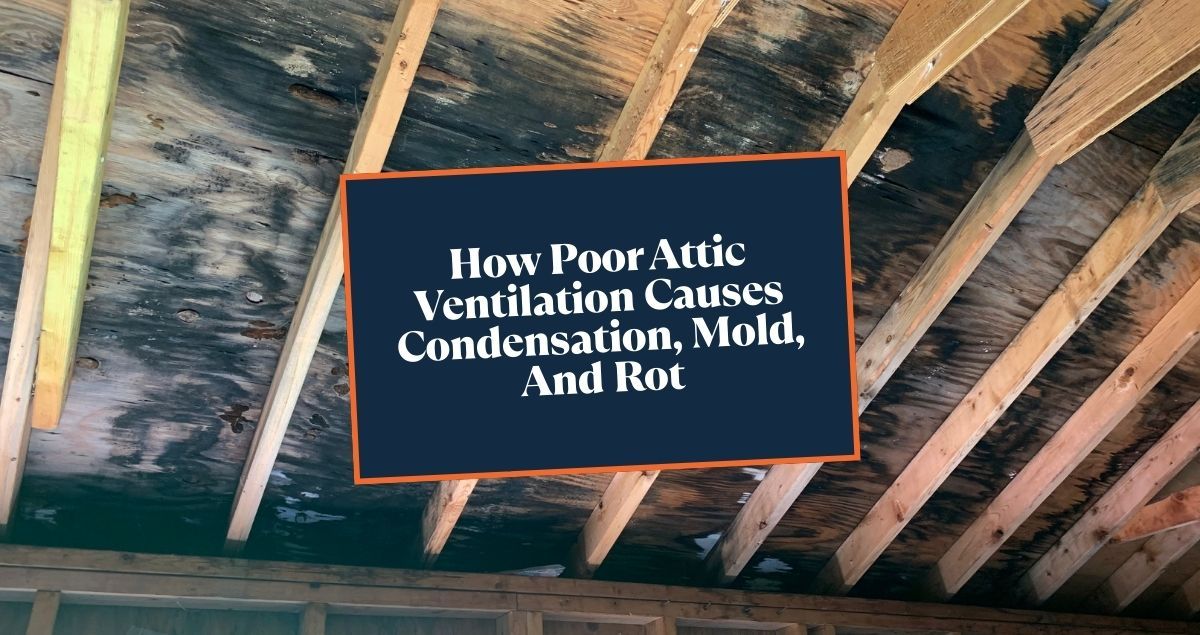
How Poor Attic Ventilation Causes Condensation, Mold, and Rot
Why moisture, not just heat, is one of the biggest risks of poor ventilation.
Cathedral and Vaulted Ceilings: The Most Commonly Misunderstood Ventilation Design
A special-case article for homes with cathedral or vaulted ceilings. This explains why these roof designs often lack a shared attic space, how each rafter bay effectively becomes its own attic, and why ventilation is so commonly done incorrectly in these areas, often leading to condensation that is mistaken for roof leaks.
Attic Ventilation and Ice Dams: Why Ventilation Is a Bigger Factor Than Most People Realize
How heat buildup and airflow issues accelerate ice dam formation.
How Proper Attic Ventilation Extends the Life of Your Roof and Exterior Products
How ventilation affects shingles, decking, siding, and trim.
Attic Ventilation, Energy Efficiency, Comfort, and HVAC Longevity
Why ventilation impacts utility bills, comfort, and mechanical systems.
How to Tell If a Roofer Actually Understands Attic Ventilation
Questions to ask and red flags to watch for.
How Attic Ventilation Is Actually Calculated, Without the Jargon
A consumer-digestible explanation of ventilation math and design.
The Most Common Attic Ventilation Mistakes Roofers Make, and Why They Sometimes Make Things Worse
Real-world examples of well-intended but harmful practices.
Final Takeaway
Proper attic ventilation is not about adding vents. It’s about designing a system that matches your home’s layout, climate, and construction.
A contractor who understands ventilation will: Ask questions. Verify conditions. Explain their reasoning. Adjust based on what’s uncovered.
That approach protects your roof, your home, and your investment.