



When homeowners think about attic ventilation problems, they usually think about heat. What most people do not realize is that moisture is often the bigger and more damaging issue.
TLDR: Poor ventilation traps moisture in the attic, leading to condensation, mold, and wood rot that can be expensive to repair. These problems often go unnoticed until significant structural damage has occurred. Regular attic inspections and proper ventilation are far cheaper than remediation.
Condensation, mold, and rot are not random problems. They are predictable outcomes of attic ventilation systems that are unbalanced, incomplete, or improperly designed.
This article explains how those problems develop, why they often go unnoticed for years, and why roof replacement is the best time to correct them.
Condensation Is the Root Problem
Condensation forms when warm, moisture-laden air comes into contact with a cooler surface.
In a home, that warm air is constantly rising. It comes from normal daily activities like cooking, showering, laundry, and even breathing. If that air is not able to exit the attic efficiently, it condenses on cooler surfaces such as:
- Roof decking
- Trusses and rafters
- Nails and fasteners
- Insulation surfaces
This happens most often in winter, but the damage accumulates year-round.
Condensation is not a leak. It is moisture forming from inside the home.
Why Poor Ventilation Makes Condensation Worse
A properly ventilated attic continuously replaces warm, moist air with cooler, drier outside air. When ventilation is unbalanced or blocked, that exchange does not happen.
Common ventilation failures that accelerate condensation include:
- Exhaust without enough intake
- Intake that is blocked or undersized
- Mixed exhaust types that short-circuit airflow
- Multiple attic spaces that are not ventilated independently
When airflow stalls, moisture has nowhere to go.
Mold Is a Symptom, Not the Cause
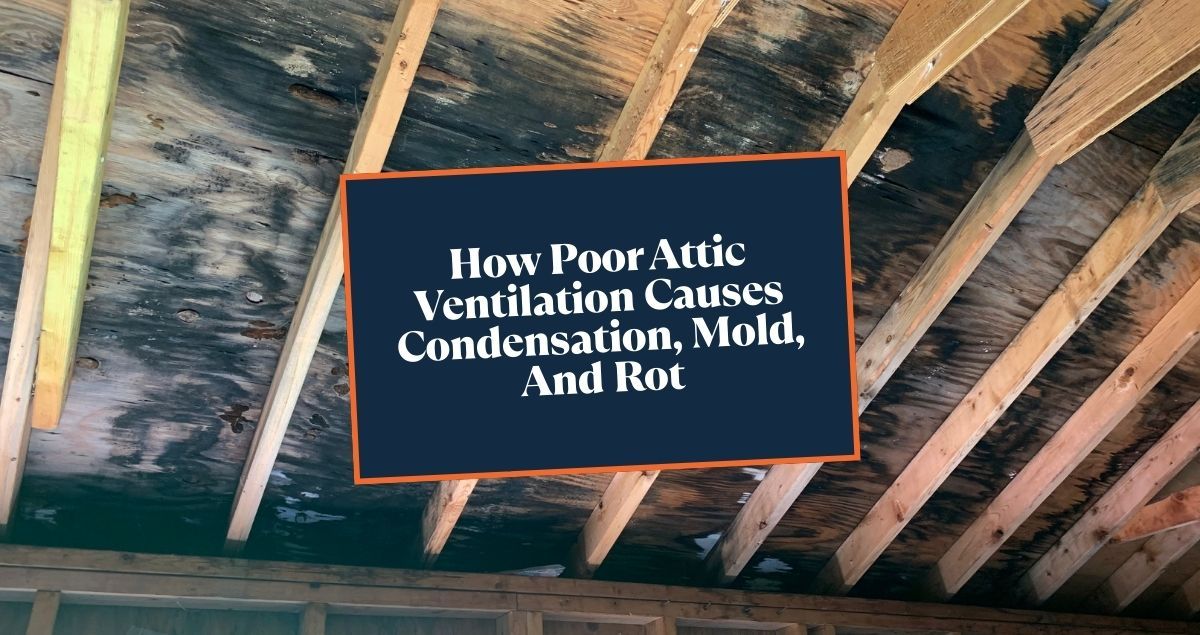
Mold growth in attics is often treated as the problem. In reality, mold is the result of persistent moisture.
If ventilation is not corrected, mold remediation alone does nothing to solve the underlying issue. The moisture remains, and mold eventually returns.
Mold typically appears:
- On the underside of roof decking
- Along truss chords
- Around fasteners
- In corners and dead-air spaces
Many homeowners never see it because attic spaces are rarely accessed.
Rot Happens Slowly and Quietly
Rot is one of the most expensive consequences of poor attic ventilation.
Wood rot develops when materials remain damp over long periods. It does not happen overnight. It happens slowly, often over years, until structural components begin to weaken.
Common areas affected include:
- Roof decking
- Trusses and rafters
- Fascia boards
- Top plates
By the time rot is discovered, repairs are often extensive and costly.
Why These Problems Are Often Missed
Condensation, mold, and rot rarely cause immediate interior symptoms.
Homeowners may not notice anything until:
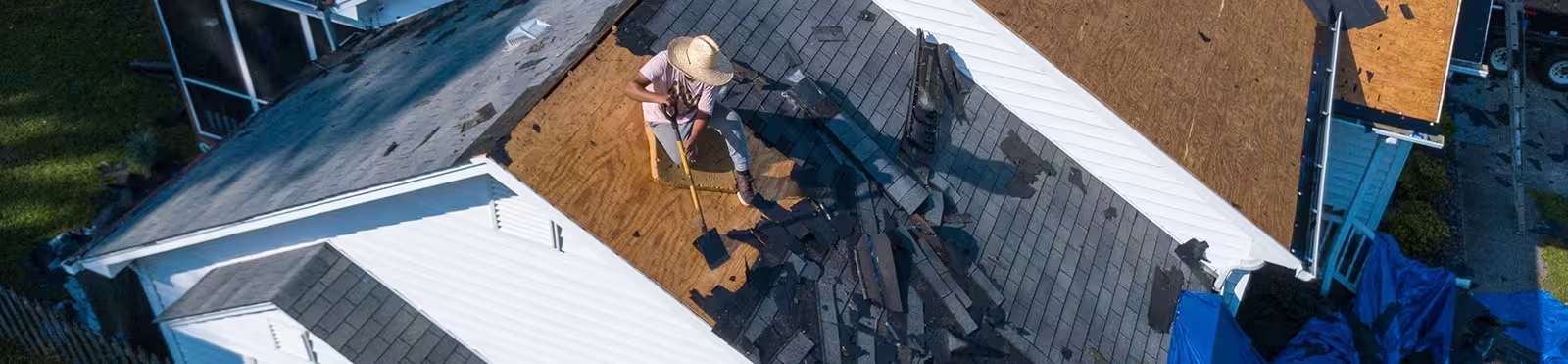
- A roof replacement exposes damaged decking
- A home inspection uncovers attic issues
- Ice dams begin forming
- Energy costs rise without explanation
Because the damage happens out of sight, it is easy to assume it does not exist.
Why Roof Replacement Is the Best Time to Address Moisture Issues
Roof replacement creates access that does not exist otherwise.
During a replacement, a qualified contractor can:
- Verify attic layout and identify multiple attic spaces
- Confirm whether soffit vents are open and functional
- Identify blocked airflow paths
- Adjust intake and exhaust placement in real time
- Correct past ventilation mistakes
Once the roof is installed, addressing these issues becomes far more invasive.
Ventilation Is About Moisture Control, Not Just Heat
Many homeowners assume ventilation is primarily for cooling attics. In reality, its most important role is moisture management.
A properly designed ventilation system:
- Reduces condensation risk
- Limits mold growth
- Protects structural components
- Extends roof and material lifespan
- Improves overall building durability
This is why ventilation design should never be an afterthought.
What Comes Next
Now that the moisture side of attic ventilation is clear, the next step is understanding how poor ventilation contributes to one of the most visible and costly problems in Colorado homes: ice dams.
Next in this series: Attic Ventilation and Ice Dams: Why Ventilation Is a Bigger Factor Than Most People Realize