
Most homeowners think of roof replacement as a material decision. Shingle type, metal vs. asphalt, color, and warranty tend to dominate the conversation.
TLDR: Ventilation extends roof life by removing heat and moisture that degrade shingles and structure. This protection applies to siding, insulation, and wood products too. The cost of fixing ventilation often pays for itself in extended material life.
What often gets overlooked is that roof longevity is just as dependent on attic conditions as it is on the roofing material itself. Even the best roofing system can fail early if it is installed over a poorly ventilated attic.
Proper attic ventilation plays a critical role in extending the life of your roof and many other exterior components of your home.
Why Roofing Materials Fail Early
Roofing materials are designed to perform within a certain temperature and moisture range.
When attic ventilation is inadequate, two things tend to happen:
- Heat builds up beneath the roof deck.
- Moisture lingers where it should not.
Over time, those conditions accelerate material breakdown from the inside out.
This is why two homes with the same roof installed at the same time can age very differently.
Heat Is One of the Biggest Enemies of Roofing Materials
Excess heat trapped in the attic raises the temperature of the roof deck and the roofing materials above it.
That heat:
- Accelerates the aging of asphalt shingles.
- Causes premature loss of oils in shingles.
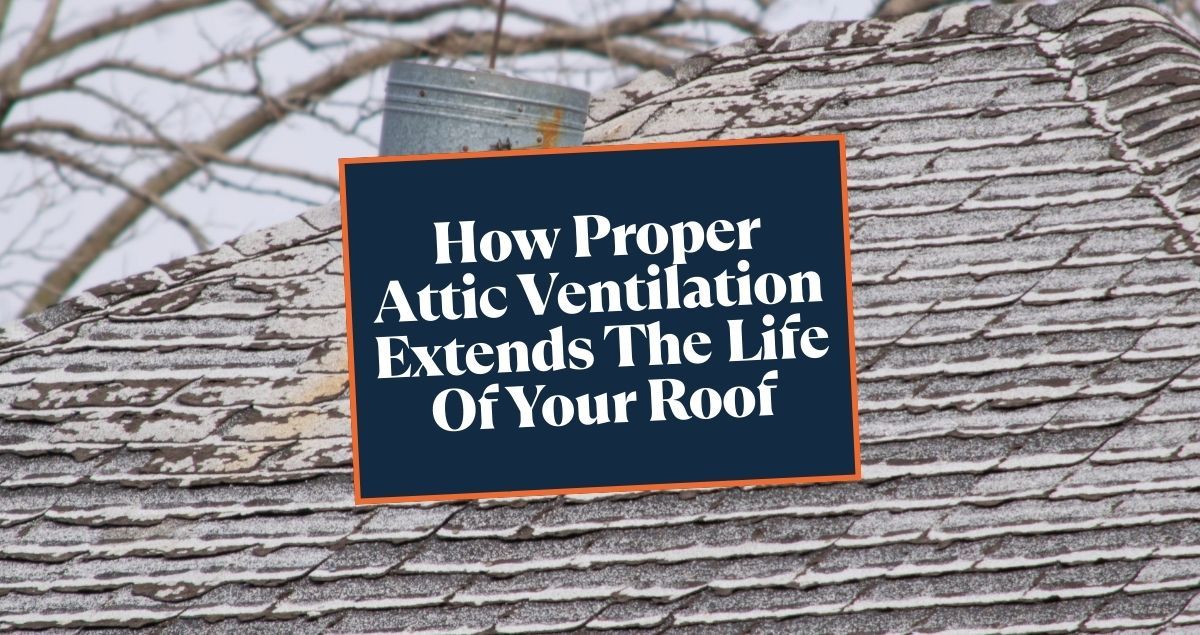
- Leads to brittleness and cracking.
- Shortens the effective lifespan of roofing products.
In Colorado, this is especially relevant due to intense sun exposure and high elevation. Roofs are exposed to significant UV radiation, and when attic heat compounds that exposure, materials degrade faster than expected.
Proper ventilation helps remove that trapped heat, keeping roof temperatures closer to ambient outdoor conditions.
Moisture Does Damage Long Before You See It
Moisture problems caused by poor ventilation rarely show themselves immediately.
When warm, moist air cannot escape the attic, it condenses on cooler surfaces such as:
- Roof decking.
- Fasteners.
- Trusses and rafters.
- Insulation.
Insulation is especially vulnerable. When insulation gets wet, it loses R-value, and that loss does not come back even if the insulation later dries. Compromised insulation reduces energy efficiency, increases heat transfer into the attic, and makes ventilation and temperature control more difficult over time.
Even if the roof covering looks fine from the outside, moisture-related damage may already be occurring beneath it.
How Ventilation Protects the Roof Deck
The roof deck is the foundation of every roofing system. If the deck is compromised, everything above it is at risk.
Proper attic ventilation:
- Keeps the underside of the roof deck drier.
- Reduces condensation cycles.
- Limits temperature extremes.
- Helps preserve structural integrity.
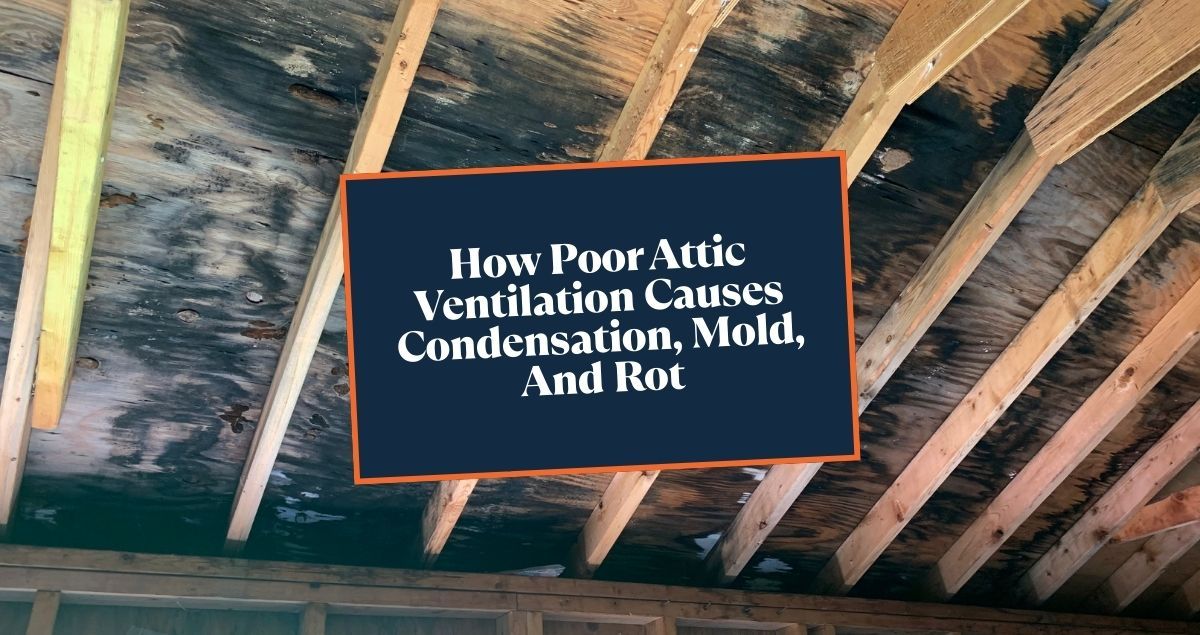
We frequently see decking that has rotted from the underside due to years of trapped moisture, even though the shingles above appeared intact until removal.
Ventilation Affects More Than Just the Roof
Poor attic ventilation does not stop at the shingles.
Other components affected include:
- Fascia boards.
- Soffits.
- Siding near the roofline.
- Skylight curbs.
When heat and moisture build up, these materials experience greater expansion, contraction, and degradation over time.
Proper ventilation helps stabilize those conditions and reduces unnecessary stress on exterior assemblies.
Why Roof Replacement Is the Best Time to Address Longevity
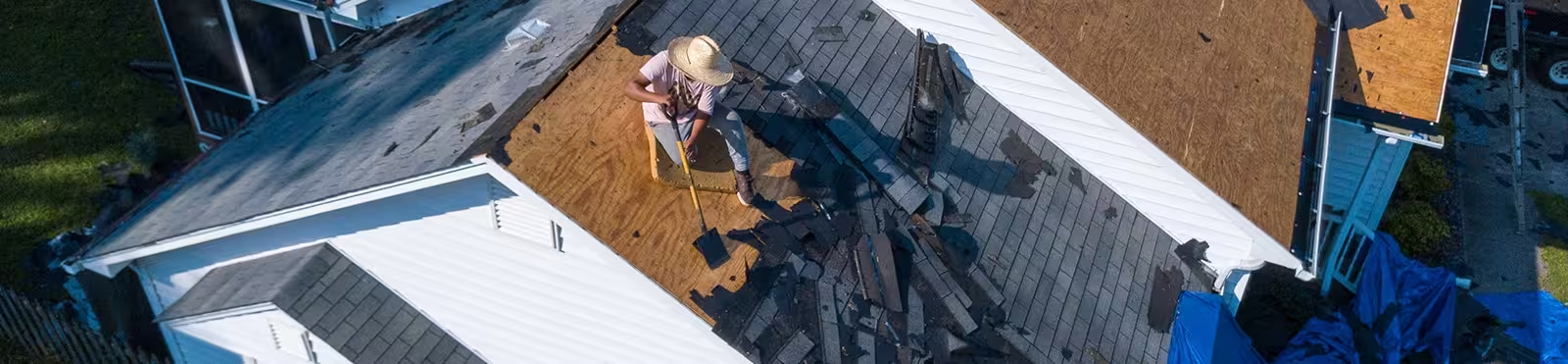
Roof replacement is one of the few times the entire roofing system is accessible.
During replacement, a qualified contractor can:
- Inspect the condition of the roof deck.
- Identify signs of heat or moisture damage.
- Correct intake and exhaust deficiencies.
- Install baffles where needed.
- Fix ventilation mistakes made by prior installations.
Once the roof is installed, correcting these issues becomes significantly more difficult and more expensive.
Ventilation and Manufacturer Warranties
Many roofing manufacturers include ventilation requirements in their installation guidelines.
While poor ventilation does not automatically void warranties, documented ventilation issues can complicate warranty claims and reduce expected performance.
A roof installed over a properly ventilated attic is far more likely to perform as intended throughout its service life.
Why “Good Enough” Ventilation Still Costs You
Some homes have ventilation that is not terrible, but not correct either.
In these cases:
- Roofs may last longer than poorly ventilated homes.
- But still fail years earlier than expected.
- And often require decking repairs at replacement time.
Those costs add up over time, even if they are not immediately visible.
What Homeowners Should Take Away
Roof longevity is not just about what you put on top of your house. It is about what is happening underneath it.
Proper attic ventilation:
- Reduces heat buildup.
- Limits moisture damage.
- Preserves roof decking.
- Protects insulation performance.
- Extends the life of roofing materials.
- Reduces stress on exterior components.
If a contractor cannot explain how ventilation affects roof lifespan, they are likely treating ventilation as an afterthought rather than a system.
What Comes Next
Now that the relationship between ventilation and roof longevity is clear, the next step is understanding how ventilation affects comfort, energy efficiency, and mechanical systems inside the home.
Next in the series: Attic Ventilation, Energy Efficiency, Comfort, and HVAC Longevity