



TLDR
• Class 4 asphalt shingle costs a little more upfront but usually pays for itself through insurance discounts.
• Class 3 asphalt shingle does not qualify for impact-resistance discounts with most Colorado carriers.
• In Colorado's hail environment, Class 4 asphalt shingle is the right call for most homeowners.
• Neither rating meaningfully changes lifespan, both land in the 20-30 year range in Colorado conditions.
What is the difference between a Class 3 asphalt shingle and a Class 4 asphalt shingle in Colorado?
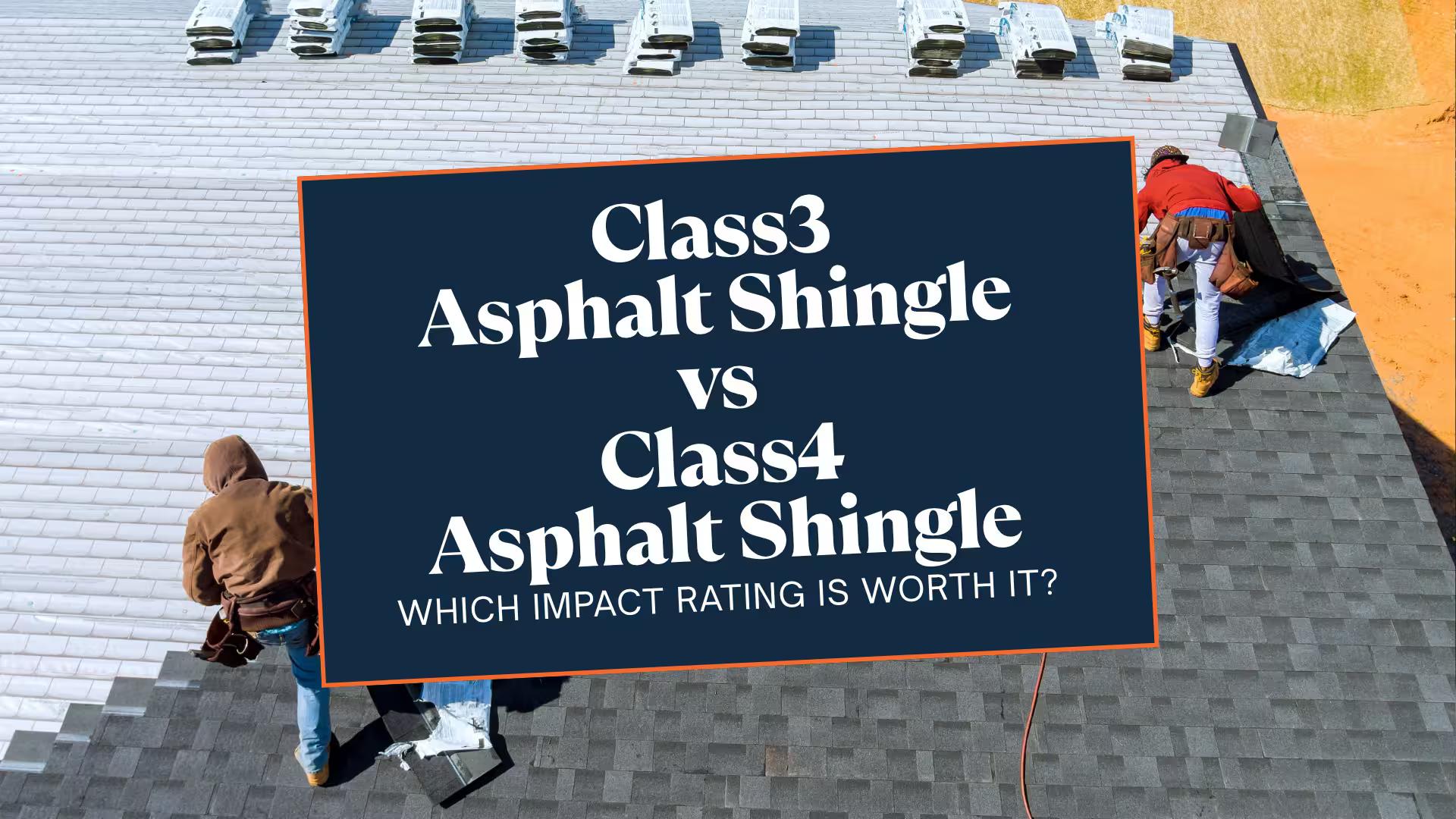
If you're replacing a roof in Colorado and your contractor is talking about Class 3 vs Class 4 asphalt shingles, the question comes down to impact rating. Both pass the UL 2218 impact test, Class 4 asphalt shingle just passes at a higher threshold. The steel ball drops from a greater height, and the shingle has to survive it without cracking or puncturing.
In practice, that difference shows up in a hailstorm. A Class 4 asphalt shingle is built to take a harder hit before it shows functional damage. Having replaced roofs across the Front Range and mountain communities after major hail events, the Class 4 products consistently show less bruising and granule loss than Class 3 on the same storm. That matters for how long the roof holds up and whether it triggers a claim.
If you're also weighing whether to move to a different material entirely, the Roofing Material Comparison Tool lets you put any two products side by side, including how asphalt stacks up against stone-coated steel, tile, and synthetic composite.
Does the impact rating on an asphalt shingle affect my homeowner's insurance in Colorado?
Yes, and this is usually where the decision gets settled. Most Colorado carriers offer a meaningful premium discount for Class 4 asphalt shingle roofs. Class 3 typically doesn't qualify. The discount amount varies by carrier and policy, but in many cases it offsets the small upfront difference between Class 3 and Class 4 within a few years of ownership.
Before you decide, call your insurance agent and ask specifically what your carrier offers for a Class 4 impact-resistant asphalt shingle roof. That number usually makes the math obvious.
Does a Class 4 asphalt shingle last longer than Class 3?
Not significantly. Both products sit in the same 20-30 year lifespan range in Colorado. UV exposure at elevation, hail frequency, and freeze-thaw cycles are hard on asphalt regardless of impact rating. Upgrading from Class 3 to Class 4 asphalt shingle buys you better performance per year, not more years. If a longer replacement cycle is the goal, that conversation starts with modified asphalt or metal products.
When does a Class 3 asphalt shingle actually make sense?
Class 3 asphalt shingle makes sense when budget is the primary constraint and you know you’re selling in the next few years. It’s still an impact-resistant shingle. It’s widely available, and it installs the same way. You’re trading the insurance benefit for a lower upfront number, which is a legitimate tradeoff in the right situation.
For most Colorado homeowners planning to stay in their home more than five years, Class 4 asphalt shingle is the better answer. The insurance discount usually justifies the premium on its own. For a full breakdown of what each asphalt tier costs on a typical Colorado home, see the Roof Price Guide.
Ready to compare your options?
Roofing Material Comparison Tool, see every material side by side