


Wondering what you should have ready before your adjuster comes out? Not sure whether you need a price nailed down before you file?
By the end of this, you’ll understand exactly how a hail claim works, what makes one strong, and why the process we’re about to walk you through is built to put you in control from day one.
TLDR
A stolen TV claim and a hail damage claim run on the same logic. You need evidence that the loss happened and a clear number for what it costs to fix. The difference is that most homeowners file roof claims without either piece in hand, because someone knocked on their door, told them they had damage, and said they needed to file right away. Everything else would get sorted out later. You should be able to hand your insurance company the scope and the price before they come out, not scramble to figure it out after.
Someone breaks into your house and steals your TV. You call your insurance company. What happens next?
They don’t just hand you a check. They need two things from you: proof the TV existed, and proof of what it costs to replace.
So you pull up the family Christmas photo, the one where everyone’s standing in front of the fireplace. Above the mantle is a 65-inch Samsung. That’s your proof. Then you go to Best Buy, find the same model, and print the listing. $1,300. That’s the replacement cost.
You submit both. The photo is your evidence. The listing is your price. Together, they make a solid claim.
Now imagine you just called your insurance company and said, “Someone stole my TV.” No photo. No receipt. No proof of what you had or what it’s worth. The adjuster comes out, writes their own number, and that’s the number you’re stuck with.
Most people would never handle a burglary claim that way. But that’s exactly how most people handle a roof claim.
What Do You Actually Need to File an Insurance Claim?
It doesn’t matter whether you’re claiming a stolen TV, a car accident, or hail damage on your roof. Insurance claims have two parts: evidence that the loss occurred, and the cost to make it right.
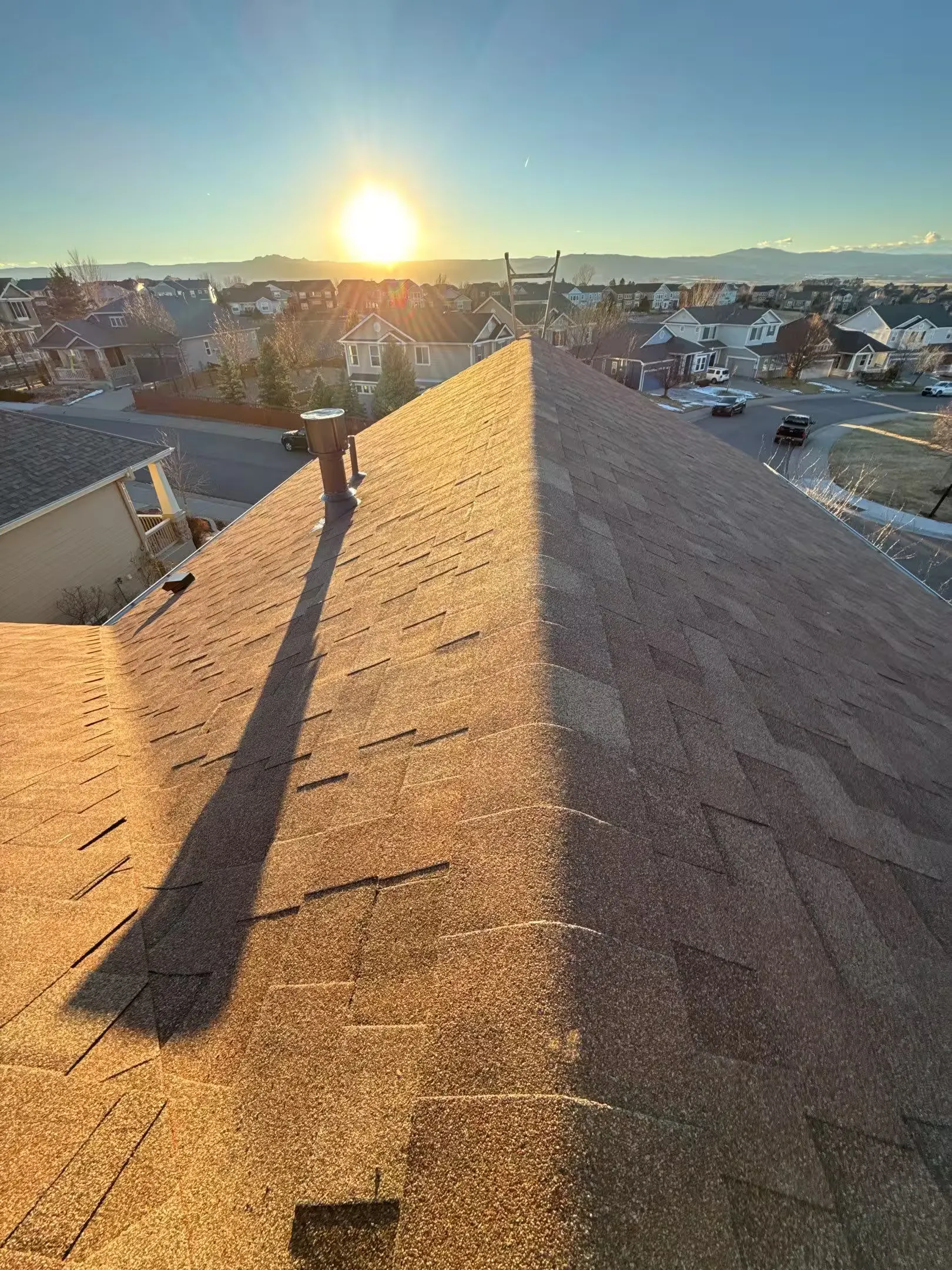
For the TV, the evidence is the Christmas photo. The cost is the Best Buy listing. For a roof, the evidence is a thorough damage inspection with hundreds of documented photos showing impact marks, cracked shingles, compromised flashing, damaged vents, everything that tells the story of what the storm did. The cost is a clearly defined scope of work: here’s what needs to be repaired or replaced, here’s exactly what it costs, and here’s why.
Evidence plus price. That’s a solid claim. It was true for the TV, and it’s true for the roof.
What Happens When You File a Hail Claim Without Documentation?
Here’s where the analogy breaks down in practice. When someone steals your TV, nobody shows up at your front door 20 minutes later offering to handle everything. But after a hailstorm, that’s exactly what happens. A contractor knocks, tells you they see damage, and asks you to sign a contract on the spot. The contract usually says “homeowner agrees to pay insurance proceeds.” No dollar amount. No defined scope. Just: whatever insurance pays, that’s the price.
Think about what that means. You’re agreeing to hire someone without knowing what they’re going to do, what materials they’ll use, or what it’ll cost. Then they push you to file before you’ve had time to prepare anything, and the claim moves forward based on whatever number the adjuster writes.
That’s the equivalent of calling your insurance company after a break-in and saying “Someone stole my TV” without the photo and without the receipt. You’ve just let someone else define what you had and what it’s worth.
What Is an “Insurance Proceeds” Contract and Why Should I Be Careful?
When a contract says “insurance proceeds” instead of a real dollar amount, here’s what typically happens. The contractor signs you fast, puts your roof on fast, and keeps their costs as low as possible on the front end. They might include some flashy-sounding upgrades to sweeten the deal, things like add-on ventilation products or extended warranties that may or may not mean anything.
Then comes the final bill. They submit a claim to your insurance company that’s as high as they can push it. Many of these companies have entire teams, sometimes outsourced, whose only job is to maximize the payout. Those teams are often paid a percentage of how much they increase the claim. When you hear a storm contractor say “we’re going to maximize your claim,” the question worth asking is: maximize it for you, or for them?
The roof they installed doesn’t change based on the final bill. They already put on the minimum they needed to. The billing process afterward is about padding their margins, not improving your roof.
What Should I Have Ready Before I File a Hail Claim?
Go back to the stolen TV. You wouldn’t file without the photo and the receipt. A roof claim should work the same way.
Before you file, you should have two things ready. First, a complete evidence package: documented photos of every damaged area, every slope, every exterior component affected by the storm. This is the Christmas photo. It’s proof of what happened.
Second, a defined scope of work with transparent pricing: here’s exactly what needs to be repaired or replaced, here are the materials, here’s the cost. This is the Best Buy receipt. It’s proof of what it takes to make it right.
When your adjuster gets both of those on day one, they have everything they need to evaluate the claim fairly. No guesswork. No vague photos taken from the ground. No back-and-forth about what was missed. You’re filing with a complete picture, and that changes the entire trajectory of the claim.
Should I Know the Price Before I File My Roof Claim?
This is probably the single most important thing to understand about insurance claims, and it’s the one thing the storm chaser model gets completely backward. They want you to sign before you know anything. File first, figure out the price later.
But you would never do that with any other insurance claim. You wouldn’t tell your auto body shop “just fix it and bill whatever insurance pays.” You’d want to know what’s being fixed, what it costs, and whether insurance covers it. A roof should be no different.
When you know the price and scope before you file, you’re in control. You can compare the adjuster’s number against a real estimate. You can see exactly where the gaps are. And if there is a difference, your contractor can show you specifically what was missed and why, with documentation to back it up. That’s a productive conversation. Without a defined scope, you’re just hoping it works out.
What Does This Actually Look Like in Practice?
I’ve been in roofing and storm restoration for 22 years. In that time, we’ve tried different approaches and seen how each one plays out. Here’s what we’ve learned.
When the documentation and pricing go to the carrier before the adjuster even comes out, claims tend to move quickly. Days to weeks. More often than not, there’s no second round of negotiation. The adjuster has a complete picture from the start, the numbers are defensible, and everything lines up. On rare occasions, we’ve seen adjusters approve claims without a site visit at all because the documentation was that thorough. That’s the exception, not the rule, but it tells you something about the weight that good evidence carries on the front end.
When we get called in after the claim is already filed, the end result is usually the same, but the road to get there is a lot longer. The adjuster has already written their estimate, and it’s almost always short. Not because the pricing is wrong, but because they’re missing line items that are necessary for the work to get done correctly. Once we build the scope and get the carrier aligned on what actually needs to be there, the numbers in their estimating software tend to work themselves out. They usually land at or above our price once the scope is correct. But that process takes weeks to months instead of days to weeks. Same destination, longer trip.
And then there’s the way the storm restoration industry has operated for years. File the claim, wait for the adjuster, replace the roof once it’s approved, and then submit an inflated number on the back end with enough padding to negotiate down and land somewhere in the middle. That approach routinely takes two to six months. We’ve run it. The entire industry runs on it. It doesn’t produce better outcomes for anyone except the billing team.
None of this should be surprising. When you’re straightforward with the carrier from the beginning, they tend to respond the way most people do when you’re straightforward with them. When you sandbag them with a big number after the work is already done, they respond the way most people do to that, too.
How We Handle This at Pak Exteriors
We build the evidence package and the scope of work before anything gets submitted to your carrier. After 22 years and every approach in the book, this is how we handle every storm damage claim now. It’s the process that actually works.
We inspect all roof slopes and exterior systems. We document everything. We create a clearly defined scope that tells you exactly what’s damaged, what needs to happen, what materials are going on your house, and what it costs. You see the number. You understand it. Then you file.
If the adjuster’s number comes in different from ours, we can have a specific conversation about where the gap is. We hold Xactimate Level 1 and Level 2 certification, which means we read the adjuster’s scope the way it was written and can point to exactly where the difference is. Not a line-item fight. A clear, documented explanation of what’s needed and why. That’s the kind of conversation that actually moves a claim forward.
It’s the Christmas photo and the Best Buy receipt. Evidence and price. That’s how a claim should work, whether it’s a stolen TV or a damaged roof.
If you’ve already received an adjuster estimate and the number feels off: What to Do When the Adjuster’s Number Feels Low.
What Happens When We Come Out for Your Inspection
If you’ve got an inspection scheduled with us, here’s what to expect. We’ll get on the roof and inspect every slope and every exterior component. We’re looking at how damage presents on your specific materials, whether impacts are isolated or widespread, and whether what we find aligns with a documented storm event in your area.
If real, documentable damage is there, we’ll walk you through what we found, show you the photos, and explain what it means. If the damage isn’t there, or it’s not enough to justify a claim, we’ll tell you that too. If the damage is real and you decide to move forward with us, that’s when we build the full evidence package and scope of work, so everything is ready before you file.
Either way, you’ll leave the conversation knowing exactly where you stand and what your options are. No pressure, no same-day signatures, no vague promises. Just a clear picture of your roof and a straight answer about what makes sense.
Frequently Asked Questions
Do I have to file the claim myself, or does my contractor do it?
You file the claim. It’s your policy and your home, so the claim comes from you. A contractor can’t file on your behalf. What a good contractor does is make sure you’re filing with the right documentation behind you: a complete evidence package and a defined scope of work, so your adjuster has everything they need from day one. What sometimes happens with storm chasers is they’ll pressure you to call your insurance company right there on the spot, standing in your driveway, five minutes after they’ve been on your roof. That’s rushing you into a claim before you’ve had time to think, let alone prepare. You want the documentation ready first.
What if I already signed an insurance proceeds contract?
Read it carefully. Many of these contracts include cancellation windows or contingency clauses. If you’re uncomfortable with what you signed, talk to the contractor and ask for a clearly defined scope and price. If they can’t give you one, that tells you something. In Colorado, you also have certain rights around contract cancellation for home solicitation sales. If you’re unsure, a conversation with your insurance agent or an attorney is worth the time. Related: What to Know Before Signing a Roofing Contract on an Insurance Claim.
What is a scope of work and why does it matter?
A scope of work tells you what’s going to happen on your roof, how it’s going to be replaced, and how much it’s going to cost. That’s it. A roof replacement is not a complicated project, and the estimate shouldn’t be complicated either. If someone hands you a document full of codes and abbreviations and line items you can’t make sense of, you should ask yourself why. You should be able to read your estimate, understand the scope, and understand the price. If you can’t, that’s worth paying attention to.
Why do adjusters sometimes come in lower than the contractor’s price?
Usually a combination of two things. Adjusters use estimating software that prices every line item based on market averages, so any contractor whose pricing is above that average will see a gap. On top of that, different carriers and adjusting teams use different internal templates for what gets included on an approved roof replacement up front. Those templates vary from carrier to carrier and sometimes from adjuster to adjuster within the same company. So line items that are legitimately necessary for the work might not appear on the initial estimate simply because they weren’t part of that adjuster’s template. That doesn’t mean anyone is trying to underpay your claim. It’s a structural gap in how the system works, and a clear scope of work is what makes it possible to close that gap. For a deeper look at how this estimating software works and why the gap exists: Why the Insurance Estimate Is Almost Always Lower Than Your Contractor’s Quote.
Can I file a hail claim without a contractor involved?
You can. But if you do, you’re relying entirely on your adjuster’s assessment, and it’s important to understand what that means. Adjusters aren’t roofing contractors. They handle a wide range of property claims and use estimating software that’s built for that same range. For a residential roof, most are working from internal templates under real time pressure, often running several inspections a day. They’re not doing anything wrong, but gaps in the estimate are common just by the nature of the job. If that number comes in short and you don’t have your own documentation to work from, you’re starting from behind. That’s how a claim that could have been resolved in weeks turns into one that drags on for months.
Disclosure: The information in this article is for general educational purposes only and is not intended as legal advice, insurance advice, or public adjusting services. Insurance policies are contracts between the homeowner and the insurance carrier, and coverage determinations are made solely by the carrier based on the terms of the policy. Homeowners should consult their insurance agent, insurance carrier, or legal counsel with specific questions regarding coverage or claims. Contractors do not interpret policy language or determine coverage.