




TLDR
Insurance approval is the beginning of the project, not the end of the process. Your payout typically comes in multiple checks, and the initial number can change if scope items were missed. The contractor decision still matters even when insurance is paying. Know what to expect from permitting through final payment, and what documentation you should have in hand when the project is complete.
Getting a full replacement approved is good news. But the claim being approved is the beginning of the project, not the end of the process. What happens between approval and completion determines whether the outcome matches what the paperwork promised.
Here's what to expect and a few things worth paying attention to before work begins.
How Does the Insurance Payout Work After Approval?
Most insurance policies pay replacement cost value, which means the payout typically comes in multiple parts, and sometimes more than two.
The first check covers the actual cash value of the damaged materials: the depreciated value at the time of loss. This is released when the claim is approved. The remaining funds, called recoverable depreciation, are held back until the work is completed and properly invoiced.
What many homeowners don't realize is that the initial actual cash value figure can change. If the adjuster's original estimate missed scope items or applied incorrect pricing, and those items get corrected, the total replacement cost value increases. When that happens, the actual cash value gets adjusted upward as well. In practice, that can mean a second check before the project is even complete, followed by the depreciation release once the work is finished. Three checks total isn't unusual on a claim where the scope needed correction.
A contractor asking for the full insurance amount before work is complete is asking for money that isn't yours yet. That's worth taking seriously. A standard payment arrangement covers materials and a deposit at contract signing, with the balance due at completion after the work is verified.
If your policy is actual cash value rather than replacement cost value, depreciation is never released. The initial payment is the final payment. This doesn't necessarily mean the project can't move forward, but it changes the financial math significantly. Your insurance agent, claims department, or adjuster can confirm which type of coverage applies.
Does the Contractor Choice Still Matter Once Insurance Approves the Claim?
It does. How a replacement is installed, ventilated, and documented determines whether the investment lasts. A claim-funded project done poorly is still a poorly installed roof.
This is actually one of the better opportunities a homeowner gets to choose the contractor they really want, because the cost of the roof is being covered, at least in part, by the carrier. That's worth saying clearly, even coming from a contractor, because this is exactly when the wrong choice tends to happen.
A few things that still matter in a contractor, even when insurance is paying:
- A written scope with a defined price, not an open-ended agreement to do whatever insurance pays
- On-site supervision from the company throughout the project
- A crew capable of completing a standard single-family asphalt replacement in a single day, a reasonable benchmark is at least 30 squares per day
- Ventilation evaluated as part of the project, not treated as a separate issue
- Clear documentation of the completed work, not just a handshake at the end
Before meeting with contractors, our Instant Roof Estimator and Roof Price Guide can help you understand what a fair price looks like for your home, even on an insurance claim. Our Roof Selector Quiz can help identify the right material for your situation if you're considering a different option.
If you're still deciding on a contractor and wondering whether to get more than one estimate: Should You Get Multiple Estimates for a Roof Insurance Claim?.
What Happens If Additional Damage Is Found During the Project?
Once work begins, physical conditions occasionally come up that weren't visible during the inspection. Decking that looked solid from above may show rot once the old materials are removed. That kind of discovery is genuinely unforeseen, and it's a legitimate reason for the scope and price to change.
Any change to scope or price mid-project should come with a specific explanation of what was found and why it wasn't visible during the initial inspection. Your contractor should show you exactly what changed, why it's needed, and what's being requested from your carrier before anything is submitted.
If you want a full explanation of what a supplement is and how the term gets misused, that's covered in detail in: What to Do When the Adjuster's Number Feels Low or Your Claim Was Denied.
This is one of the clearest tests of how a contractor operates. Transparency during the project is just as important as transparency before it.
What Should a Well-Run Roof Replacement Look Like?
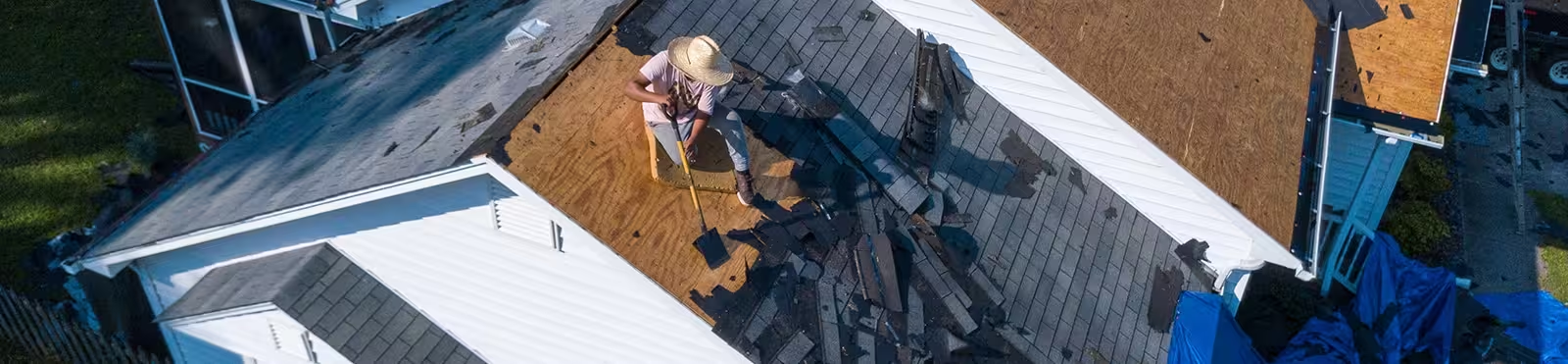
From permitting through final inspection, a well-run replacement follows a consistent sequence. Permits get pulled before work starts. Materials are delivered a day or two ahead of installation. The crew protects your property before tearing off the existing roof. A construction manager from the company is on site and reachable throughout the day.
Ventilation is confirmed on site before installation begins. Decking is inspected before new materials go down. Every penetration gets re-flashed with new components. The property is cleaned completely before the crew leaves, including gutters, downspouts, and a magnetic pass for nails.
For a complete walkthrough of each stage: What a Colorado Roof Replacement Should Look Like From Start to Finish.
What Should I Receive When the Project Is Complete?
When the project is complete, two things should come with your final payment: a lien waiver and your warranty documentation.
The lien waiver confirms that all materials and subcontractors have been paid, protecting you against any future liens on your property. It's a standard document on a well-run project and something worth asking for if it's not offered.
Warranty documentation covers both the contractor's workmanship warranty and any manufacturer warranties that apply to the materials installed. If an extended manufacturer-backed warranty was part of your project, it should be registered and confirmed in writing.
For a plain-language breakdown of how roofing warranties work: Roof Warranty Guide.
Frequently Asked Questions
When do I get my second insurance payment?
The recoverable depreciation is typically released after the work is complete and you submit proof of completion to your carrier. That usually means a final invoice and sometimes a certificate of completion. Your carrier can tell you exactly what documentation they require. If the scope was corrected during the claim process, confirm with your carrier what the final approved amount is before submitting for depreciation release.
Do I have to use my insurance payout for the roof?
The short answer is that you're generally expected to. If the damage has been approved for replacement, the payout is tied to that loss. You can choose not to do the work and keep the actual cash value funds, but the damaged portion of your home is now effectively uninsured. If something goes wrong down the road and that damage contributed to it, your carrier isn't obligated to pay for it again.
If there's a mortgage on the property, your lender is likely listed as a co-payee on the check. Most lenders will require confirmation that the repairs were completed before releasing funds, and they'll follow up. They have a stake in the condition of the property too.
It's not uncommon for homeowners to choose not to replace a smaller covered item, gutters, for example, and reallocate those funds. That's a decision homeowners can make, but it's worth understanding what it means: those gutters are now uninsured going forward. If they're damaged in a future storm, there's a good chance they won't be covered.
What are my material options if my roof is being replaced through insurance?
Insurance reimburses for like-kind-and-quality replacement of what was damaged. That sets the baseline. From there, homeowners have real options, and we present them the same way whether a project is insurance-funded or out of pocket. The goal is full visibility into what's available so you can make the decision that's right for your home and your budget. Our Roof Selector Quiz can help you think through which option fits your situation.
What if I disagree with something the contractor does during the project?
Raise it immediately and in writing if possible. A well-run project has a construction manager on site who is your point of contact. Any concern that changes scope or cost should be discussed and agreed to before the work proceeds, not discovered after the fact.
What is a lien waiver and why does it matter?
A lien waiver is a document from your contractor confirming that all suppliers and subcontractors involved in your project have been paid. Without it, a supplier or sub that wasn't paid could place a lien on your property, even though you paid your contractor in full. It's standard on a well-run project and worth asking for if it isn't offered at completion.
Disclosure: The information in this article is for general educational purposes only and is not intended as legal advice, insurance advice, or public adjusting services. Insurance policies are contracts between the homeowner and the insurance carrier, and coverage determinations are made solely by the carrier based on the terms of the policy. Homeowners should consult their insurance agent, insurance carrier, or legal counsel with specific questions regarding coverage or claims. Contractors do not interpret policy language or determine coverage.