

Colorado homeowners are increasingly asking the same question, especially along the Front Range and in mountain communities. If asphalt shingles are effectively becoming 10-year roofs due to insurance changes and climate stress, what roofing system actually makes sense long term?
For many homes, the answer is stone-coated steel roofing.
Stone-coated steel has become one of the best-performing roofing systems in Colorado’s most demanding environments, from hail-prone metro areas to heavy snow load mountain regions. When properly designed and installed, it offers durability, energy efficiency, and longevity that traditional asphalt shingles simply cannot match.
Why Asphalt Shingles Are Becoming Short-Term Roofs in Denver
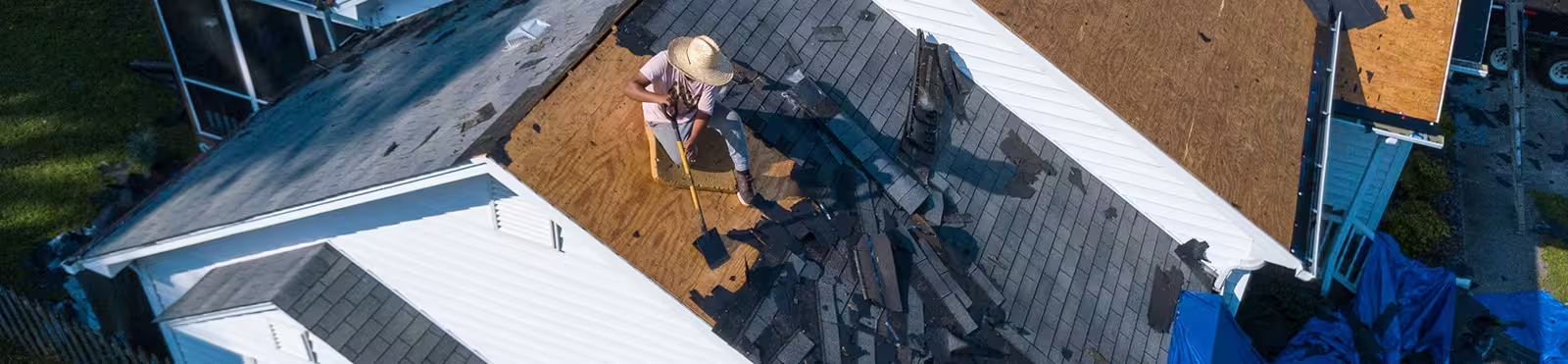
In the Denver metro area, insurance carriers are increasingly reducing or eliminating roof coverage on asphalt shingles once they reach the 10-year mark. Even well-installed architectural shingles are often treated as depreciated assets long before their advertised lifespan.
This shift has changed the value equation. Homeowners are now being asked to replace roofs more frequently, often out of pocket, even when shingles appear serviceable.
Stone-coated steel changes that equation by offering a roofing system that insurers view as more durable and lower risk over time.
What Is Stone-Coated Steel Roofing
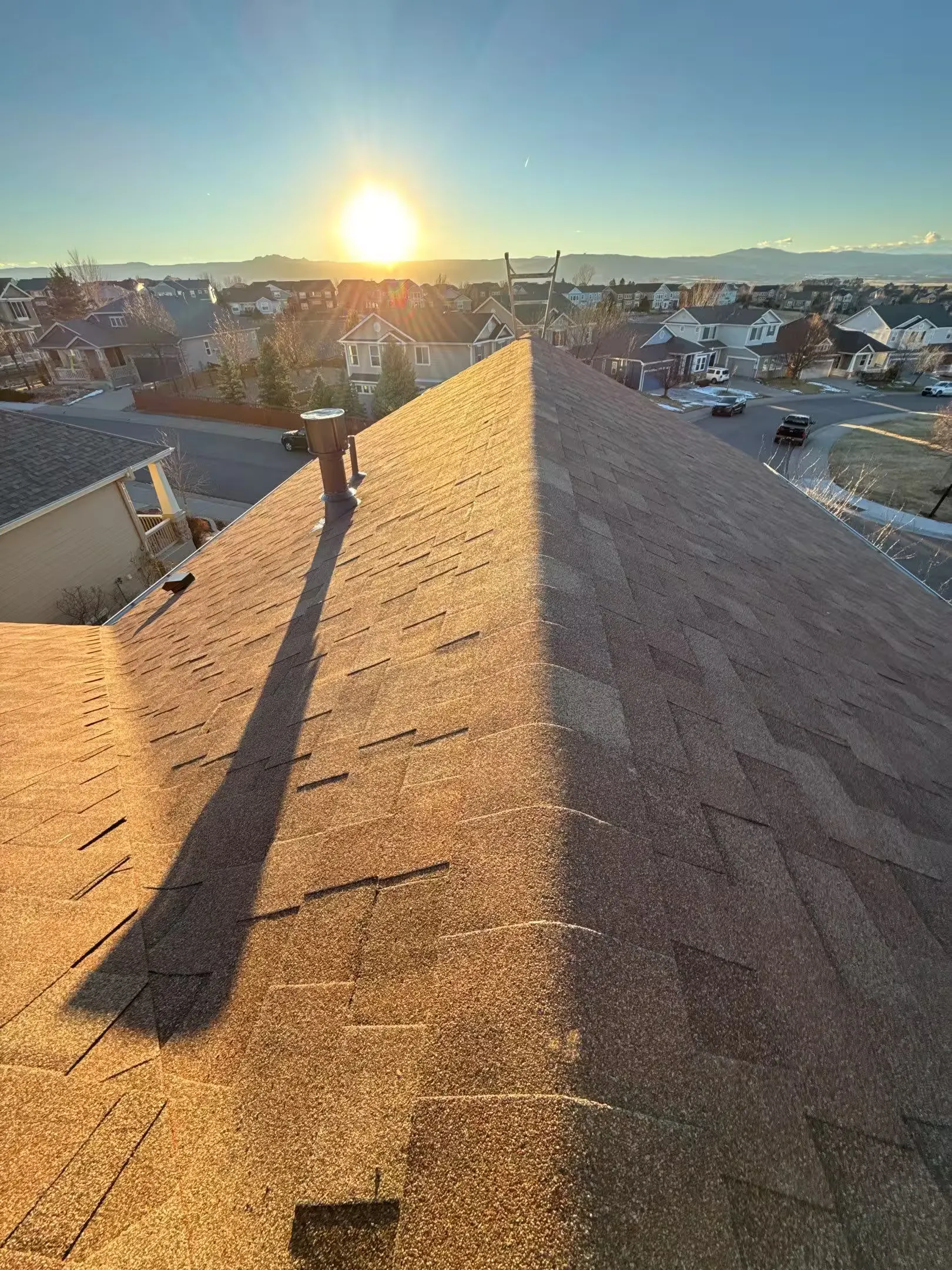
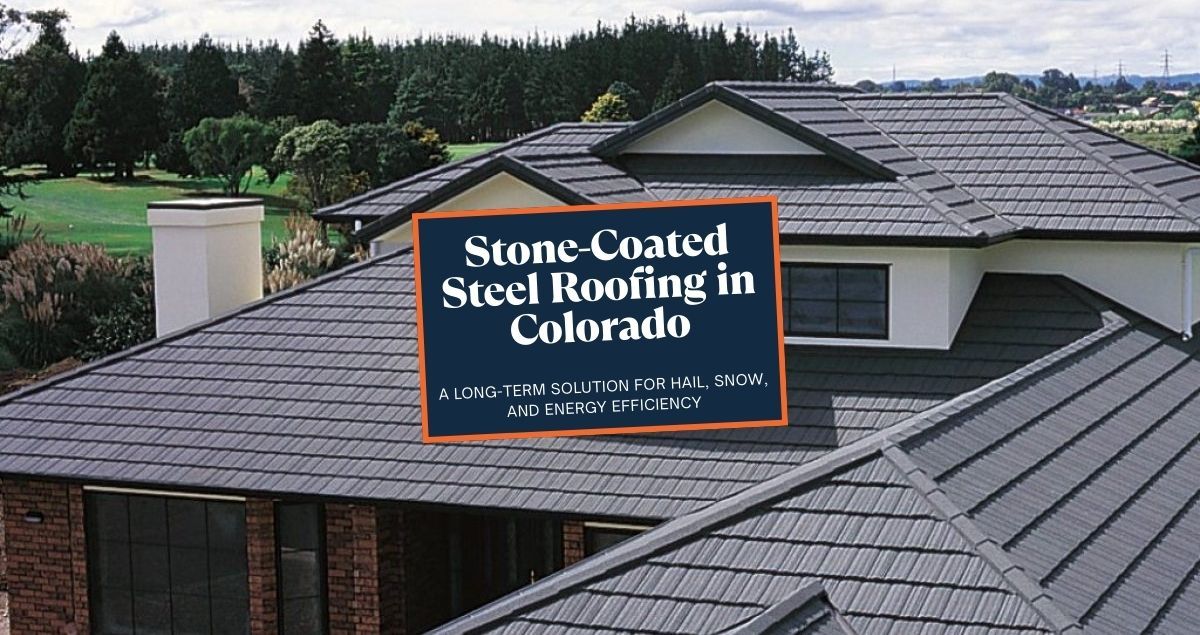
Stone-coated steel roofing is made from steel panels that are coated with stone granules. This combination provides the strength of steel with the texture and performance benefits of a granulated surface.
Manufacturers such as Unified Steel and DECRA have engineered stone-coated steel systems specifically for extreme climates. Unlike smooth metal panels, stone-coated steel manages weather forces in a more controlled way and is designed for long service life in harsh environments.
Exceptional Performance in Hail Markets
Hail is one of the most destructive forces roofs face in Colorado.
Stone-coated steel systems carry a Very Severe Hail (VSH) rating, which exceeds the Class 4 impact resistance standard most homeowners are familiar with. In practical terms, this means stone-coated steel can withstand hail events that would severely damage or destroy asphalt shingles.
In the Denver metro area, hail large enough to compromise a properly installed stone-coated steel roof is extremely rare. For most homeowners, this means the roof they install today is likely the last roof they will ever need, barring truly extraordinary hail events.
Energy Efficiency and Cold Roof Performance
Stone-coated steel is not just about durability. It is also a strong performer from an energy standpoint.
When installed using elevated batten systems, stone-coated steel creates an airspace between the roof covering and the deck. This assembly functions as a cold roof system.
Paired with proper attic ventilation, this design reduces heat transfer into the attic, improves overall energy efficiency, and helps regulate indoor temperatures during extreme heat. In Colorado’s climate, where homes experience intense sun exposure and wide temperature swings, this roof assembly performs exceptionally well.
Mountain Performance and Snow Load Management
In mountain and high-elevation areas, snow performance becomes just as important as hail resistance.
Stone-coated steel offers a unique balance between snow release and snow retention. The steel substrate warms quickly, allowing snow to melt and release in a controlled way, while the stone-coated surface creates friction that helps hold snow in place.
This balance makes stone-coated steel, including systems from Unified Steel, especially well-suited for mountain homes where unmanaged snow release can create safety issues.
Heat Cable Compatibility and Ice Management
Stone-coated steel works exceptionally well with heat cable systems.
Because steel conducts heat efficiently, warmth from the heat cable spreads into the surrounding steel, not just the cable itself. This creates hot edges, valleys, and sidewalls, improving ice dam prevention and overall winter performance.
Built for Harsh Mountain Climates
Mountain environments are hard on roofing systems.
Expansion and contraction, intense UV exposure, prolonged snow cover, and freeze-thaw cycles all accelerate wear on asphalt shingles. In many mountain areas, asphalt roofs struggle to last 20 years.
Stone-coated steel is far better suited for these extremes. It handles thermal movement, UV exposure, and long-term weather stress without the rapid degradation seen in asphalt systems. For mountain homeowners, stone-coated steel is often the best overall value, not because it is the cheapest upfront, but because it lasts significantly longer.
Cost, Financing, and Long-Term Value
There is no way around it. Upgrading from asphalt shingles to stone-coated steel is a significant upfront price increase.
However, context matters.
Roofing costs have increased nearly 50% over the last five years, with no clear signal that this trend is slowing down. Homeowners who replace asphalt roofs multiple times over long ownership periods often spend far more than they would by installing a long-term system once.
With smart financing options, many homeowners are able to make the upgrade to stone-coated steel affordable on a monthly basis. When viewed over 20 to 40 years, stone-coated steel often becomes a major money saver for homeowners planning to stay in their home.
Stone-coated steel roofs, particularly premium systems like Unified Steel, can also significantly increase home value and buyer appeal during resale, especially in hail-prone and mountain markets.
How to Know If Stone-Coated Steel Is Right for Your Home
Stone-coated steel is an excellent option, but it is not the right choice for every home. Roof structure, architecture, location, and budget all matter.
If you want a fast, low-pressure way to see whether stone-coated steel makes sense for your home, you can start with our Roof Selector Quiz, which helps identify roof types that fit your specific situation.
From there, our Instant Estimator can show realistic price ranges for stone-coated steel systems, including options from manufacturers like Unified Steel and DECRA, based on your actual home.
Stone-coated steel is a specialty product that most contractors don’t install. We maintain manufacturer certifications and installation experience across multiple premium systems, which means this recommendation, when we make it, is based on whether it’s the right fit for your home, not whether it’s the only premium product we know how to install.
Final Thoughts
Colorado’s roofing landscape is changing. Shorter insurance timelines, harsher weather, and rising replacement costs are forcing homeowners to rethink long-term value.
Stone-coated steel stands out because it addresses these challenges directly. In hail-prone metro areas and snow-heavy mountain regions alike, it delivers durability, energy efficiency, and longevity that few roofing systems can match.
For homeowners who plan to stay in their home and want a true long-term solution, stone-coated steel is one of the strongest roofing investments available in Colorado today.