

Next Up: How Embers Destroy Homes in Colorado Wildfires
Related: Home Hardening Guide
TLDR: Class A is the highest fire rating a roofing assembly can carry, but what it actually tests is narrower than most homeowners realize. It also matters whether the rating belongs to the material itself or to a specific combination of materials installed together. This article explains the difference, what Class A does and doesn't protect against, and what else matters beyond the rating when you're evaluating a roof for fire resistance.
Class A is the highest fire rating a roofing assembly can carry. You'll see it on product spec sheets, contractor proposals, and insurance documentation, sometimes described as though it settles the question of fire protection on its own.
It doesn't quite work that way. Class A is meaningful, but what it actually means is narrower than most homeowners realize.
Where do fire ratings come from?
Roof fire ratings come from ASTM International testing standards, specifically ASTM E108, which tests how roofing materials and assemblies behave under simulated fire exposure. The test involves flame spread, burning brand exposure, and weather resistance under fire conditions.
Class A is the most protective category. Class B and Class C offer progressively less resistance. Class A materials must resist flame spread across the surface, not allow fire to penetrate the roof deck, and resist burning brand exposure without igniting.
What is the difference between a material fire rating and an assembly fire rating?
Some materials carry a Class A rating on their own. Metal roofing and some concrete tile products fall into this category. The material itself, regardless of what it's installed over, meets Class A requirements.
Stone-coated steel is one of the most relevant examples. Because steel is non-combustible by nature, the rating is inherent to the product, not dependent on a specific tested configuration beneath it.
→ Stone-Coated Steel Roofing in Colorado: A Long-Term Solution for Hail, Snow, and Energy Efficiency
Most asphalt shingles do not carry a standalone Class A rating. They achieve it as part of a specific assembly. Change one component, or install the same shingle over a different substrate than what was tested, and the assembly rating no longer applies. If a shingle's Class A rating is assembly-dependent, the installation needs to follow the tested configuration for the rating to hold.
It's worth remembering that Class A is an assembly rating, not a product rating. The roof covering, the underlayments, and all of the components together have to meet the requirements, not just the shingle on top. Most modern products are capable of being part of a Class A assembly. What matters is whether the roofer understands what that assembly actually needs to look like and installs it accordingly.
What does a Class A rating actually protect against?
Class A testing focuses on direct flame exposure and burning brand contact. It does not specifically test ember accumulation in gutters or valleys. It does not test ember entry through vents. And it does not test the roof deck's resistance to ignition from the inside.
In Colorado wildfire scenarios driven by high winds and long-range ember transport, a Class A roof is a meaningful layer of protection. But it's one layer, not a complete solution.
What else matters beyond the fire rating itself?
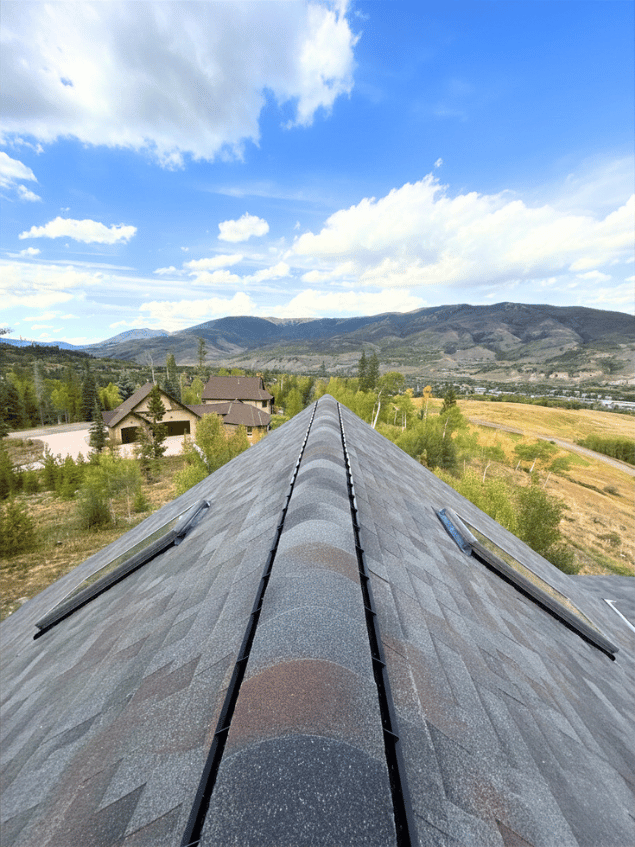
Ridge vents and other penetrations are a significant factor. A well-rated roof assembly with standard ventilation components that lack ember screening creates entry points that undermine the protection the roof material provides. Proper attic ventilation design also plays a role in how a home behaves under fire stress.
→ Attic Ventilation 101: What It Is, Why It Matters, and Why Most Colorado Homes Get It Wrong
Underlayment quality and proper installation at valleys, hips, rakes, and eaves also affect how a roof assembly actually performs. These are the places where ember accumulation is most likely and where installation quality affects long-term behavior.
Do siding products carry fire ratings too?
Siding carries fire ratings too, though the conversation around it lags behind roofing by years. Ignition-resistant construction is increasingly required in Colorado building codes for wildland-urban interface zones, and for good reason.
The difference between non-combustible and combustible siding in a wildfire scenario is not subtle. Vinyl siding can melt and pull away from the wall when exposed to radiant heat from a neighboring structure, opening up the wall cavity before any flame has made direct contact. Fiber cement siding doesn't do that. It's non-combustible, it doesn't add fuel to a fire, and it holds up to radiant heat in ways that vinyl and wood simply can't match. If you're in a WUI zone and you're replacing siding, the material choice matters more than most homeowners realize.
How do I read a fire rating claim honestly when reviewing a contractor's proposal?
When a contractor or product rep mentions a Class A rating, it's worth slowing down and asking exactly what that means for the specific proposal in front of you. Is it a material rating or an assembly rating? If it's an assembly rating, what are the specific components required to achieve it? Are the ventilation components in the system also tested for ember resistance, or does the assembly rating stop at the shingle?
These aren't trick questions and they're not complicated. But they're the difference between a roof that actually delivers the protection you're paying for and one that looks good on paper. Class A is the right standard for Colorado. Just make sure the full assembly earns it, not just the product on the label. If you want to see how your home's roof and siding stack up across fire resistance and other risk areas, the Home Hardening Quiz walks through a full assessment.
→ Home Hardening Quiz