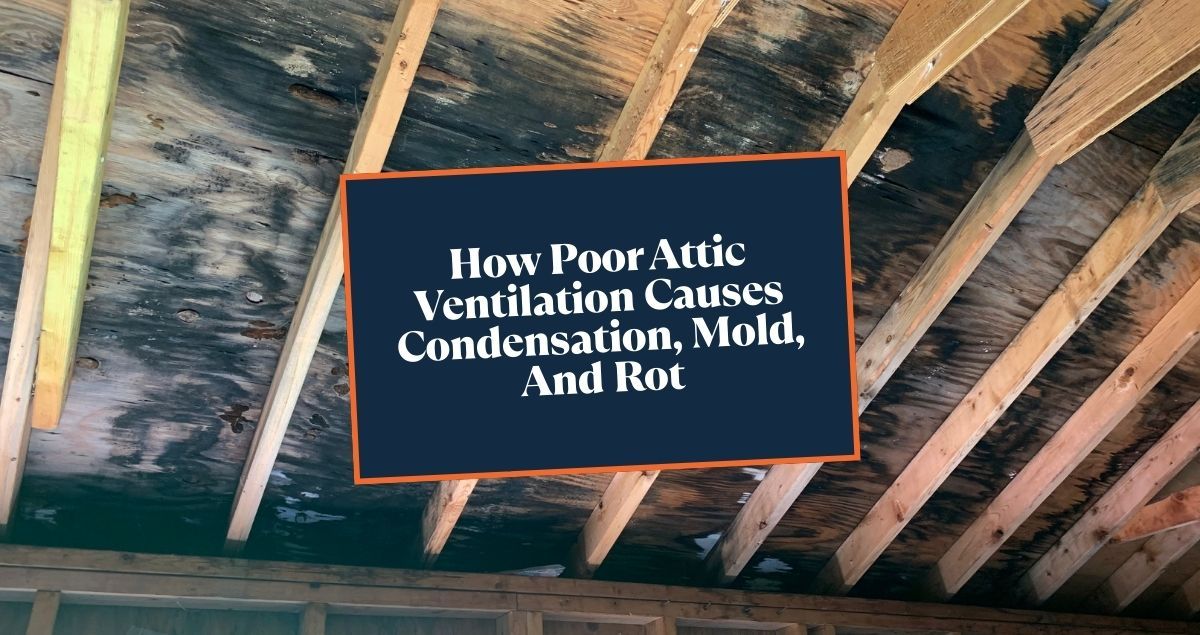







Attic ventilation is one of the most misunderstood aspects of roofing. It is also one of the most important.
TLDR: Proper attic ventilation extends roof life, prevents moisture damage, and improves energy efficiency. Most Colorado homes have inadequate ventilation due to poor design or installation. Understanding your ventilation needs is the first step toward fixing the problem.
Many homeowners assume attic ventilation is either present or absent. In reality, most homes are ventilated incorrectly. Some lack enough ventilation. Others have ventilation that is unbalanced or working against itself. Many homes have had vents added over time without any real design behind them, and in many cases, those well-intended upgrades actually made attic performance worse.
This article explains what attic ventilation really is, why it matters, and why so many homes in Colorado struggle with it.
What Attic Ventilation Actually Is
Attic ventilation is the controlled movement of air through the attic space.
A properly ventilated attic has:
- Intake, which allows fresh air to enter.
- Exhaust, which allows warm, moist air to exit.
- A clear airflow path between the two.
Ventilation is not about heat removal alone. It is about managing heat, moisture, and pressure inside the home.
Intake and Exhaust Must Be Balanced
One of the most common misconceptions is that adding more vents automatically improves ventilation.
It does not.
Ventilation only works when intake and exhaust are balanced. Adding exhaust without enough intake can pull conditioned air from the home, increase energy loss, and worsen moisture problems.
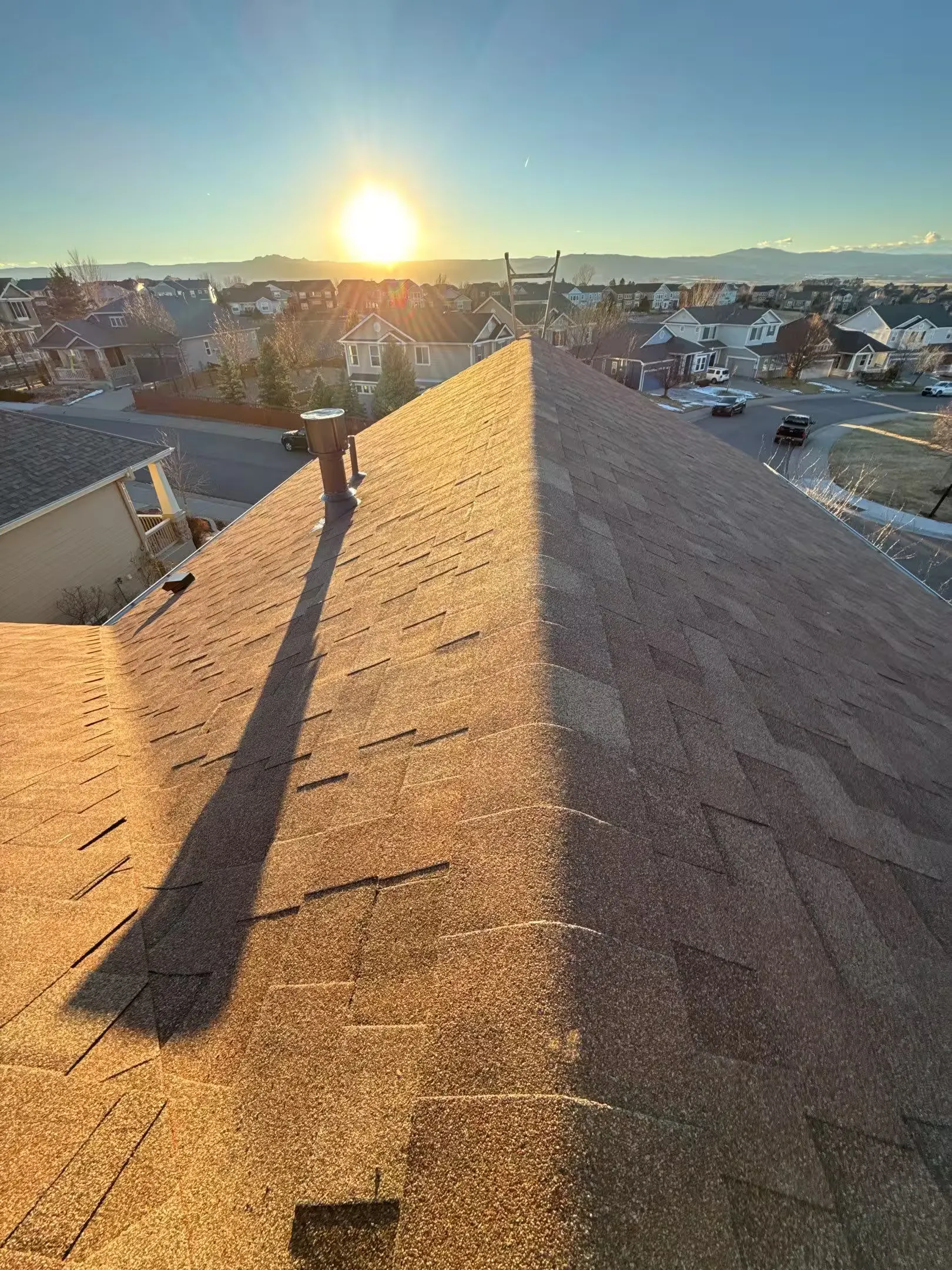
Simply installing ridge vent does not mean a home is properly ventilated.
Why Roof Replacement Is the Best Time to Fix Ventilation
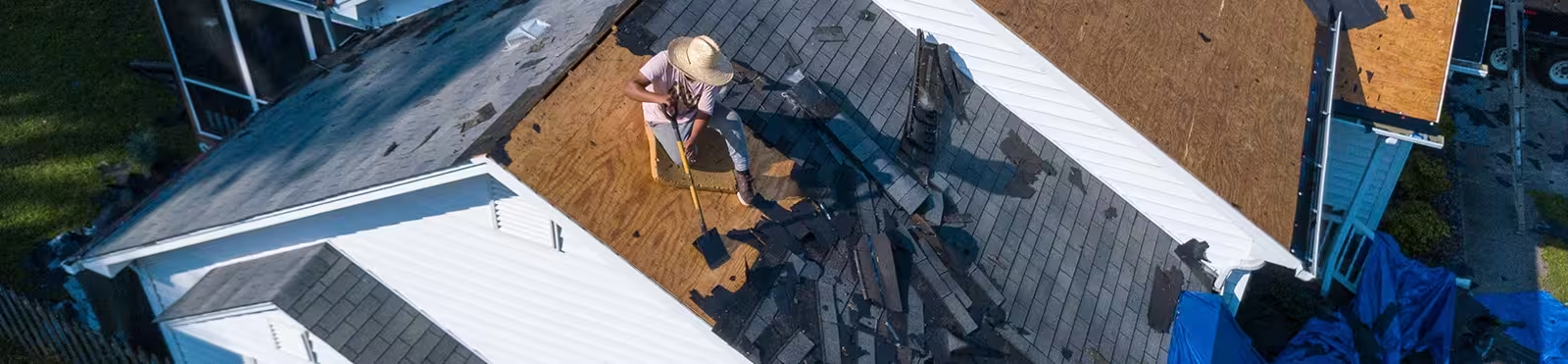
Roof replacement provides a rare opportunity to evaluate and correct attic ventilation properly.
Once a new roof is installed, making changes becomes more invasive and more expensive. Unfortunately, many roof replacements are completed without any meaningful ventilation assessment at all.
That often leads to:
- Continued moisture problems.
- Accelerated roof aging.
- Ice dam formation.
- Comfort and energy issues throughout the home.
These issues are not unavoidable. In most cases, they are the result of ventilation systems that were never properly designed or corrected during roof replacement.
Before going deeper, it is important to clarify one thing.
Attic ventilation is not a single calculation or a one-size-fits-all solution. Many homes do not have one large attic. They have multiple attic spaces separated by framing, rooflines, or ceiling transitions. Each of those attic spaces must be ventilated independently.
A system that ventilates one section of a roof does nothing for another section if there is no shared airflow path between them.
Because of this, proper ventilation design typically happens in two phases.
First, a contractor should have a ventilation plan before the job starts, based on roof geometry, intake options, and exhaust placement.
Second, that plan should be verified during installation. This often means visually confirming attic layout by accessing the attic or temporarily removing small sections of roof decking to confirm where attic spaces actually exist. From there, the ventilation design can be adjusted in real time to ensure each attic space has proper intake, exhaust, and airflow.
Ventilation design that only exists on paper often fails in real-world conditions.
What Proper Ventilation Protects Against
When designed correctly, attic ventilation helps:
- Reduce condensation and mold risk.
- Protect roof decking, trusses, and rafters.
- Reduce ice dam formation.
- Extend roof and exterior product lifespan.
- Improve comfort and energy efficiency.
- Reduce strain on HVAC systems.
Ventilation is not an upgrade. It is a system that affects the entire home.
What Comes Next
Understanding ventilation conceptually is the first step. The next step is understanding the actual components that make up a ventilation system and how they are often misused.
Next in this series: Attic Ventilation Components Explained: What They Are, How They Work, and How They’re Commonly Misused