




Attic ventilation is often discussed as a roofing topic, but its influence extends well beyond the roof itself.
TLDR: Proper attic ventilation directly impacts energy costs, home comfort, and HVAC system lifespan. Better ventilation reduces cooling strain in summer and prevents moisture buildup in winter. The benefits extend well beyond preserving your roof.
While attic ventilation is not a solution for improperly sized or failing HVAC systems, it plays an important supporting role in how efficiently a home operates, how consistently temperatures are maintained, and how hard mechanical systems have to work over time.
Understanding that distinction is key to setting realistic expectations.
How Attic Conditions Influence Energy Use
Heat naturally moves from warmer areas to cooler ones. In summer, heat accumulates in the attic. In winter, warm air from the living space rises upward.
When attic ventilation is inadequate, heat and moisture tend to linger longer than they should. This can increase temperature extremes in the attic, which in turn increases heat transfer into or out of the living space below.
Proper attic ventilation helps moderate attic conditions so insulation, air sealing, and mechanical systems can perform more consistently.
Ventilation Supports Insulation, It Does Not Replace It
Insulation slows heat transfer. Ventilation helps manage heat and moisture.
Without proper ventilation:
- Heat can build up above insulation in warm months.
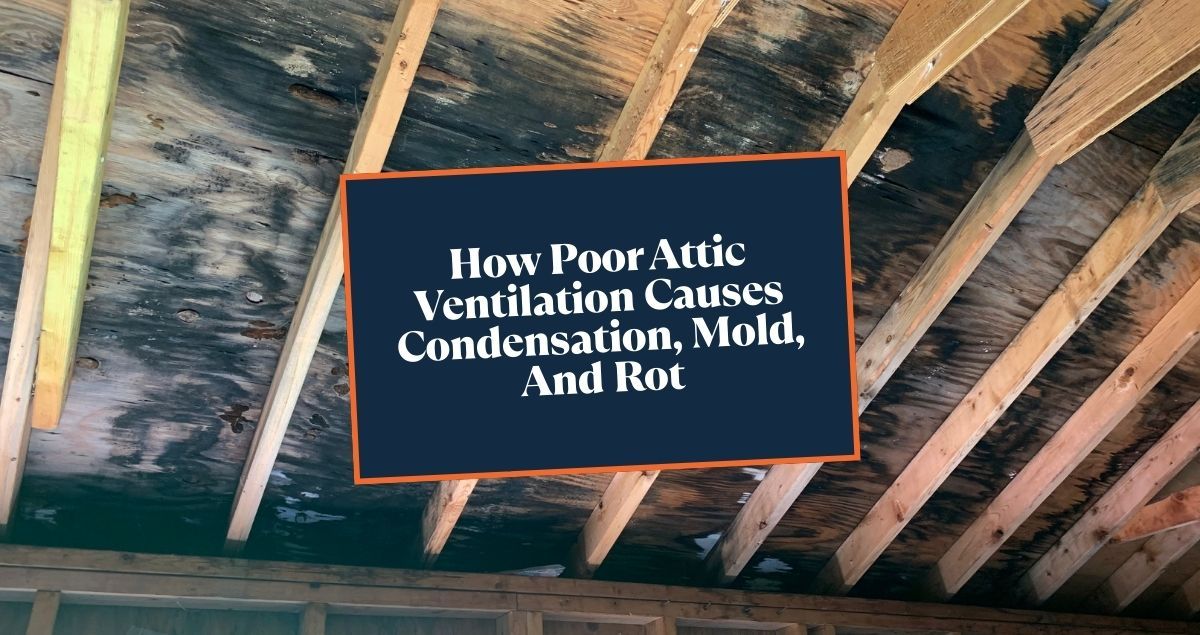
- Moisture can accumulate within insulation layers in colder months.
- Insulation performance can degrade over time.
Insulation that becomes wet loses R-value, and that loss does not fully return even after drying. Ventilation helps protect insulation by keeping attic conditions drier and more stable, but it does not compensate for insufficient insulation or poor installation.
Comfort Issues Often Have Multiple Causes
Uneven temperatures, hot or cold rooms, and difficulty maintaining comfort are rarely caused by a single issue.
These conditions can be influenced by:
- HVAC system design and sizing.
- Duct layout and leakage.
- Insulation levels.
- Air sealing.
- Attic conditions.
Poor attic ventilation is often a contributing factor rather than the root cause. By reducing temperature extremes and moisture buildup in the attic, proper ventilation can help reduce one source of stress on the overall system, even if it does not eliminate comfort issues entirely.
How Attic Ventilation Affects HVAC Longevity
HVAC systems are designed to operate within certain temperature ranges.
When attic temperatures are consistently extreme, HVAC systems may run longer and cycle more frequently to maintain indoor comfort. Over time, that additional workload can contribute to increased wear on mechanical components.
Proper attic ventilation helps reduce extreme attic temperatures and moisture levels, allowing HVAC systems to operate under less demanding conditions. This can support more consistent performance and, in some cases, longer equipment lifespan.
How Attic Conditions Can Affect HVAC Performance
In some homes, ductwork runs through the attic or attic-adjacent spaces. In those cases, extreme attic temperatures can directly impact system efficiency before conditioned air ever reaches the living space.
In many Colorado homes, especially those with basements or crawlspaces, ductwork is more commonly routed through floor systems rather than the attic. Even in those homes, attic ventilation still matters.
Poor attic ventilation can increase heat transfer into the living space in summer and increase heat loss in winter. That added thermal load means HVAC systems have to work harder to maintain indoor comfort, regardless of where the ductwork is located.
Proper attic ventilation helps moderate attic temperatures and moisture levels, reducing unnecessary strain on HVAC systems over time.
Why Roof Replacement Is a Practical Opportunity
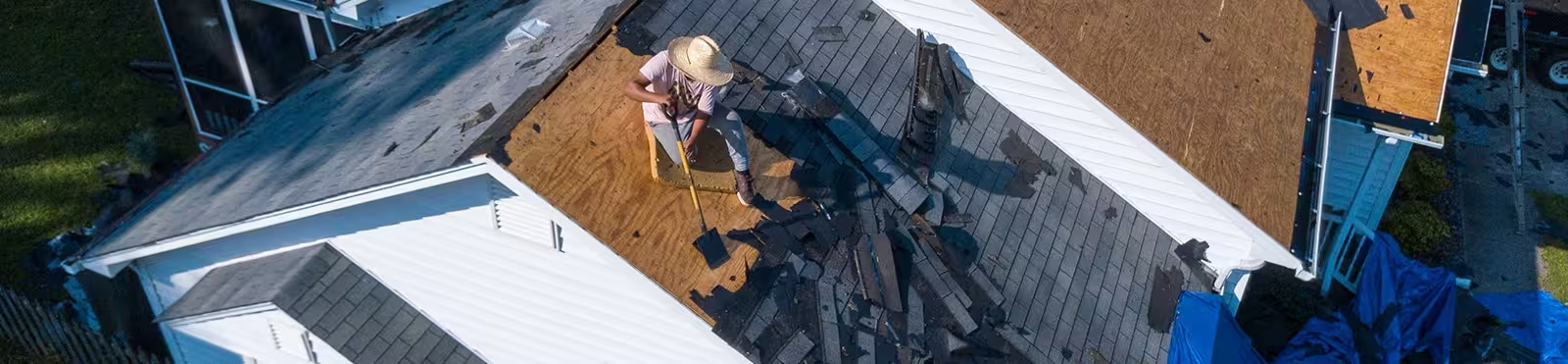
Roof replacement does not fix HVAC problems, but it does provide a rare opportunity to address attic conditions that influence system performance.
During roof replacement, a qualified contractor can:
- Evaluate attic airflow and ventilation balance.
- Identify blocked or missing intake.
- Install baffles where insulation restricts airflow.
- Correct ventilation designs that contribute to excess heat buildup.
Once the roof is installed, these improvements become more invasive and more expensive.
Energy Efficiency Benefits, Without Overpromising
Proper attic ventilation can contribute to:
- Reduced attic heat buildup in summer.
- More consistent attic temperatures year-round.
- Improved insulation performance.
- Reduced overall energy load on the home.
The impact varies by home, climate, and existing conditions. Ventilation should be viewed as part of a larger system, not a standalone solution.
What Homeowners Should Take Away
Attic ventilation does not replace proper HVAC design, insulation, or air sealing.
What it does is reduce unnecessary stress on those systems.
When ventilation is designed correctly:
- Attic temperatures are more stable.
- Moisture is better managed.
- Insulation performs more consistently.
- HVAC systems operate under less extreme conditions.
A knowledgeable contractor should be able to explain these relationships clearly, without promising outcomes that depend on factors outside of ventilation alone.
What Comes Next
Now that the role of attic ventilation in supporting energy efficiency and HVAC longevity is clear, the final step in this series is understanding how to identify whether a contractor actually understands attic ventilation or is simply installing vents without a plan.
Next in the series: How to Tell If a Roofer Actually Understands Attic Ventilation