



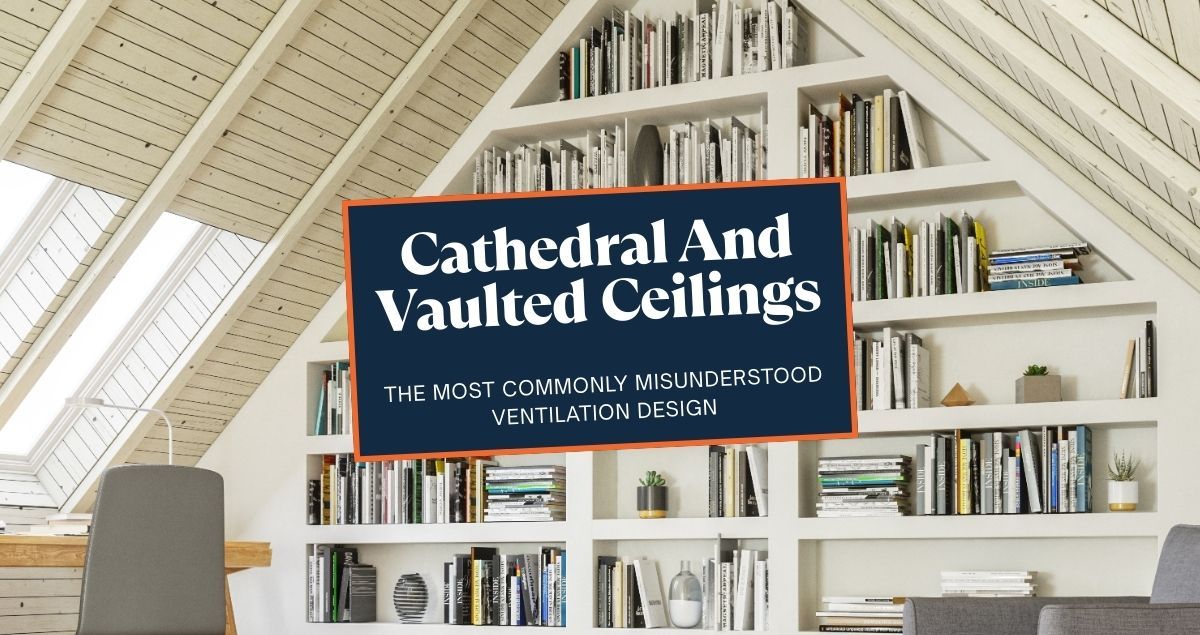

Cathedral and vaulted ceilings are some of the most visually appealing roof designs, but they are also the most commonly misunderstood when it comes to attic ventilation.
TLDR: Cathedral and vaulted ceilings need specialized ventilation that differs significantly from standard attic systems. Common mistakes in these configurations lead to moisture, mold, and structural problems. Getting it right requires a contractor who understands the specific design challenges.
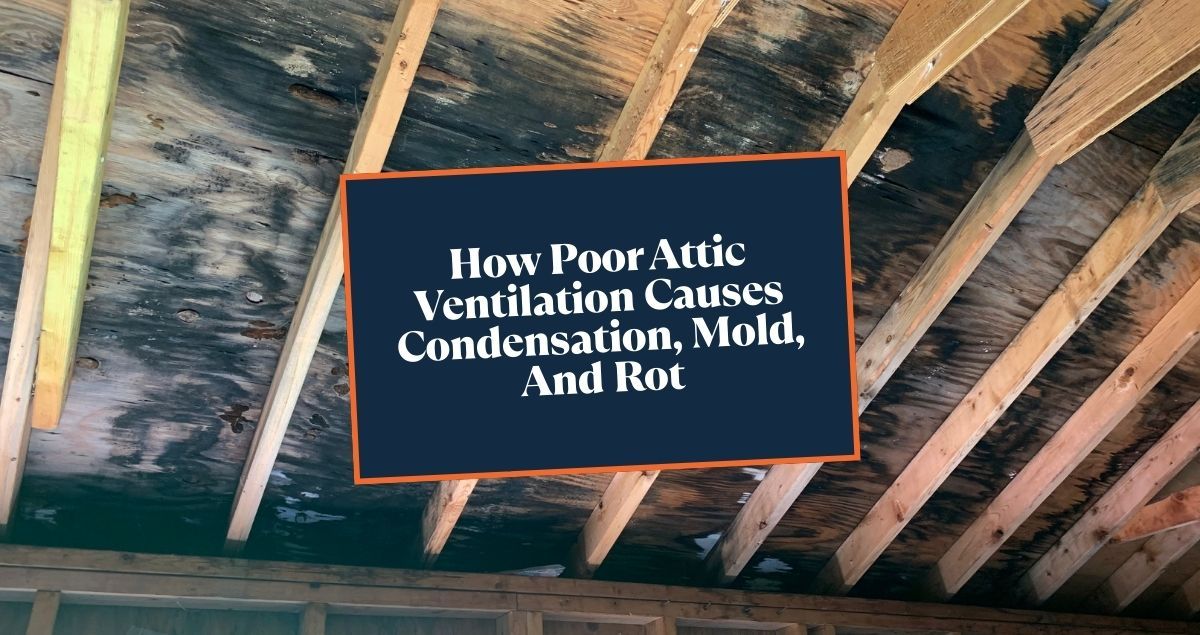
Homes with these ceiling types are far more likely to experience condensation issues, active ice dams, and real structural damage when ventilation is not designed correctly. In many cases, the roof covering itself is not the problem. The issue is how air and moisture move, or fail to move, through the roof system.
Understanding why these ceilings behave differently is key to understanding why ventilation is so often done incorrectly.
What Is a Cathedral or Vaulted Ceiling?
A cathedral or vaulted ceiling is any ceiling that follows the slope of the roof rather than sitting flat with a large attic space above it.
In these designs:
- Drywall is attached directly to the underside of the rafters.
- Roof decking is attached directly to the top of those same rafters.
- There is little to no open attic space between them.
Each rafter bay, the space between two rafters, effectively becomes its own miniature attic.
Unlike a traditional attic, where air can move freely across a large open space, cathedral ceilings are broken into many narrow, isolated channels.
Why Ventilation Is More Complex in These Roofs
In a traditional attic, intake air enters low, exhaust exits high, and air can move laterally before exiting. In cathedral ceilings, airflow must move vertically within each individual rafter bay.
That creates several challenges:
- There is very limited space for airflow.
- Intake and exhaust openings are smaller.
- Insulation often blocks airflow entirely.
- Achieving perfect balance is rarely possible.
Because of these limitations, cathedral ceilings are far less forgiving of design mistakes.
Why Each Rafter Bay Must Be Ventilated
A common mistake is assuming that ventilating part of a roof slope ventilates the entire ceiling.
It does not.
Each rafter bay must have:
- A source of intake air.
- A continuous airflow path.
- A point of exhaust.
If even a portion of the roof slope lacks intake or exhaust, moisture can accumulate in that bay, even if other areas of the roof are properly ventilated.
This is one of the most common reasons homeowners experience isolated moisture staining or recurring issues in the same areas of the ceiling.
Condensation in Cathedral Ceilings Is Often Misdiagnosed
Because cathedral ceilings place drywall and insulation directly against the roof structure, condensation issues tend to show up on interior ceiling surfaces.
Homeowners may see:
- Water staining.
- Seasonal dripping during freeze and thaw cycles.
- Damp drywall.
- Mold odors.
These are often chased as roof leaks for years, even when the roofing materials themselves are performing correctly.
In many cases, the moisture is coming from inside the home and condensing on cold roof decking due to a lack of airflow.
Why Roof Replacement Is the Best Time to Fix This
Roof replacement is often the only practical time to properly correct ventilation in cathedral ceilings.
In many of these homes, insulation is packed tightly from the drywall all the way to the underside of the roof deck. There is no open air channel for ventilation to occur.
During roof replacement, contractors can install attic baffles. These are foam, cardboard, or plastic channels that attach to the sides of the rafters and compress the insulation downward, maintaining a consistent air gap of at least one inch between the insulation and the roof deck.
When installed correctly:
- The baffle runs continuously through the entire rafter bay.
- Intake air can enter at the bottom of the bay.
- Air can move uninterrupted to the exhaust at the top.
Without baffles, ventilation in cathedral ceilings is often impossible, regardless of how many vents are added.
The Real Risk: Rot From the Underside
One of the most serious consequences of poor cathedral ceiling ventilation is decking rot that occurs from the underside of the roof.
Because moisture is trapped against the roof deck, rot can develop slowly and invisibly. Homeowners may not know there is a problem until the roof is removed.
This type of damage is preventable, but only when ventilation is addressed correctly.
What Homeowners Should Take Away
Cathedral and vaulted ceilings are not defective designs. They simply require a more intentional approach to ventilation.
If your home has these ceiling types:
- Ventilation must be designed for each rafter bay.
- Insulation must allow for an air channel.
- Intake and exhaust must be continuous across the roof slope.
- Moisture issues should not automatically be assumed to be roof leaks.
A contractor should be able to clearly explain how airflow moves through each rafter bay and how insulation, baffles, intake, and exhaust work together.
What Comes Next
Now that one of the most commonly misunderstood roof designs is clear, the next step is understanding how ventilation failures directly contribute to ice dams in Colorado homes.
Next in the series: Attic Ventilation and Ice Dams: Why Ventilation Is a Bigger Factor Than Most People Realize