
Next Up: When Hail Exceeds Asphalt: Stone-Coated Steel and Very Severe Hail
Related: Why Higher Deductibles Are Changing How Homeowners Think About Claims
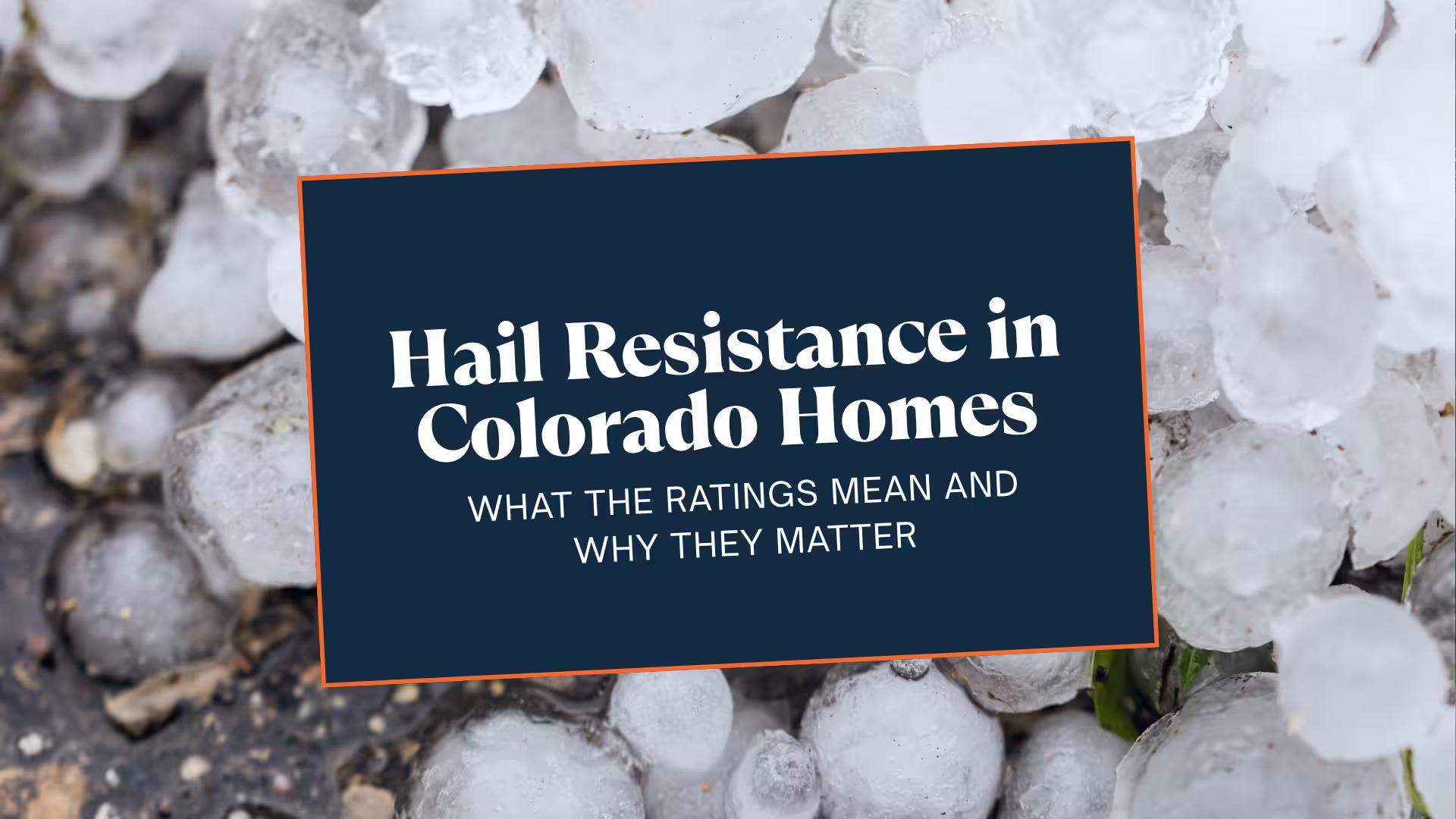
TLDR: Not all hail-resistant roofing is equal. The UL 2218 rating system goes from Class 1 to Class 4, and Colorado's hail environment regularly makes Class 1 and 2 products look inadequate within a few years of installation. SBS-modified Class 4 shingles are the right baseline for most Front Range homes. This article explains how the ratings work, what the differences actually mean in practice, and why service life matters more than surviving any single storm.
Colorado is one of the most hail-prone states in the country. The corridor from Fort Collins through Denver and down to Colorado Springs sits in what's sometimes called "hail alley," where atmospheric conditions regularly produce hailstones large enough to cause serious damage to roofs and siding.
Most homeowners have dealt with at least one significant hail event. Some have dealt with several. And with deductibles rising and insurance claims becoming more complicated, the performance of your roofing material over time matters more than it used to.
How is hail resistance rated?
Impact resistance for roofing products is rated using the UL 2218 test standard. The test involves dropping steel balls of specific sizes from specific heights onto roofing samples and observing the results. The ratings go from Class 1 through Class 4, with Class 4 being the most impact-resistant.
Class 1 involves a 1.25-inch steel ball dropped from about 12 feet. Class 4 uses a 2-inch steel ball dropped from 20 feet. A product that passes Class 4 without cracking or fracturing earns the highest rating.
It's worth noting that the UL 2218 test was developed for more moderate hail conditions. Some Colorado communities, particularly along the Front Range, regularly see hailstones significantly larger than two inches. There's a separate standard for those conditions, which we cover in the next article in this series.
How do standard architectural shingles actually perform in Colorado hail?
Most homes in Colorado were built with standard three-tab or architectural asphalt shingles. Older products often carry a Class 1 or Class 2 impact rating, and some have no meaningful rating at all. Newer architectural shingles have improved, and many now carry a Class 3 rating, but Class 3 is still a step below what Colorado's hail environment regularly demands.
After repeated impacts, granule loss accelerates, shingle integrity degrades, and the roof's service life shortens. A standard architectural shingle that gets hit hard in year three and again in year seven and again in year eleven is not the same product it was when installed. The cumulative damage may not always produce visible leaks, but it shortens the service life and increases long-term ownership cost. After a significant hail event, the difference between a standard architectural shingle and a Class 4 roof is visible on inspection, and the gap widens with every subsequent storm.
Before deciding whether to file a claim after a storm, confirming what damage actually exists and documenting it properly matters.
→ How to Know If Your Roof or Siding Has Hail or Wind Damage Likely to Be Covered by Insurance
What do Class 3 impact-resistant shingles offer?
Class 3 shingles represent a meaningful step up in performance. They handle moderate hail better and tend to hold up more consistently through repeated impacts. In some insurance programs, Class 3 shingles qualify for premium discounts, though this varies significantly by carrier and doesn't apply universally. It's worth asking your insurance agent what your carrier recognizes, and reviewing your policy to understand what triggers your deductible.
→ Understanding Your Insurance Policy Before Filing a Hail or Wind Claim
What makes Class 4 impact-resistant shingles different?
Class 4 is the standard most contractors and homeowners refer to when talking about hail-resistant roofing. These products are designed to handle hailstones up to two inches in diameter without cracking or fracturing.
Colorado carriers, particularly after significant hail events, have pushed more homeowners toward Class 4 products. Some insurance programs specifically require or incentivize Class 4 installation. The discounts, when available, can be meaningful enough to affect the net cost comparison with standard products.
Class 4 shingles come in two general categories. Standard Class 4 products achieve their rating through a heavier asphalt formulation and fiberglass mat. Premium SBS-modified Class 4 products use styrene-butadiene-styrene rubber modification, which makes them significantly more flexible and more resistant to impact across a wider range of temperatures.
What is SBS modification and why does it matter in Colorado?
Standard asphalt shingles become brittle in cold weather. That matters in Colorado because some of the most damaging hail events happen in October and November, when temperatures are already dropping and shingles are already losing flexibility. A Class 4 shingle that passes the UL 2218 test at room temperature can behave very differently at 25 degrees. SBS-modified shingles stay flexible at low temperatures, which means they're actually performing closer to their rating when the weather is coldest.
SBS products also hold their granules better under repeated moderate impacts. A standard shingle that takes a hit loses granules, and every granule lost is accelerated aging. An SBS shingle handles the same hit with less degradation. Over ten or fifteen years of Colorado weather, that difference compounds. The premium is real, but so is what you get for it.
Why does service life matter more than surviving any single storm?
A standard architectural shingle roof in hail-prone areas is likely to need replacement or significant repairs within 15 to 20 years, sometimes sooner after multiple impact events. A Class 4 SBS roof, under normal Colorado conditions, can realistically deliver 25 to 30 years of service life.
The additional cost at installation, spread over a longer useful life and factoring in the claims and deductibles avoided along the way, often makes the premium product the more economical choice. For a realistic look at what these systems cost today, the replacement cost guide gives you current numbers.
→ Colorado Roof Replacement Cost 2026: What Homeowners Actually Pay
What if the hail in my area regularly exceeds two inches?
Class 4 is the top of the UL 2218 rating system. Colorado regularly produces hailstones larger than two inches, and some events involve stones of three inches or more. For those conditions, there's a different category of roofing products designed around very severe hail standards. We cover that in the next article in this series.
If you're evaluating contractors to handle a roof replacement or hail-related repair, these questions are worth asking before you sign anything.
→ How to Tell If a Roofing Contractor Actually Knows What They're Doing
→ 8 Questions to Ask Any Colorado Contractor Before You Sign
If you're still figuring out which material tier makes sense for your home and your area, the Home Hardening Quiz walks through your specific risk profile and gives you a clear starting point.
→ Home Hardening Quiz