
TLDR: This recap ties together the full home hardening series: why insurance is shifting risk back to homeowners, how embers actually start fires, what hail ratings mean in practice, and when premium roofing systems justify their cost. It also tells you where to start based on your primary risk, whether that's wildfire, hail, or both.
You've made it through a lot of ground in this series. Most of this information isn't easy to find in one place, and a lot of it runs counter to how home improvement is usually marketed.
If you want to put what you've learned into action right now, the Home Hardening Quiz is the fastest way to see how your specific home scores across each of the areas this series covers.
→ Home Hardening Quiz
What were the key things homeowners learned in this series?
Insurance isn't working the way it used to in Colorado. Rising premiums, percentage-based hail deductibles, and tighter underwriting have fundamentally changed the financial math of homeownership here. Filing a claim for moderate damage is no longer automatically the right move. The threshold for what's worth filing has gotten much higher.
That shift changes the value of durability. When you're absorbing more of the financial exposure yourself, investing in materials that reduce how often damage occurs becomes a more defensible financial decision. If you're currently dealing with an open claim or trying to understand how the process works, there's a full guide built around exactly that.
→ Hail & Wind Insurance Claims: A Homeowner's Guide to Doing It Right
Wildfire risk in Colorado is broader and different than most people assume. Homes aren't usually destroyed by a wall of flame. They're ignited by embers, often through attic vents and other small openings. Attic ventilation design is part of this story, not just a comfort and energy question.
→ Attic Ventilation 101: What It Is, Why It Matters, and Why Most Colorado Homes Get It Wrong
Class A fire ratings and Class 4 impact ratings are meaningful benchmarks, but the details behind them matter. Material ratings versus assembly ratings, the specific installation components required, and what isn't covered by those ratings all affect how much protection you actually get.
Where should you start based on your primary risk?
If wildfire risk is the primary concern, vent protection is the highest-priority, most accessible upgrade available. Replacing standard vents with ember-resistant covers is relatively low cost, addresses one of the most common ignition pathways, and doesn't require waiting for a full roof replacement. Clearing the first five feet adjacent to the structure, including gutters, combustible mulch, and direct fence and deck connections to the house, adds meaningful protection at very low cost.
If hail frequency and damage are the main concern, the material decision happens at roof replacement time. Class 4 SBS-modified shingles are the right standard to insist on for a standard asphalt system in Colorado. In areas with VSH history, stone-coated steel is worth a serious look.
→ Stone-Coated Steel Roofing in Colorado: A Long-Term Solution for Hail, Snow, and Energy Efficiency
If you're trying to build a complete picture of your home's vulnerabilities, the Roof Type Guide is also useful if the material decision is still unclear.
→ What Roof Type Is Best for My Home?
How should you sequence upgrades over time?
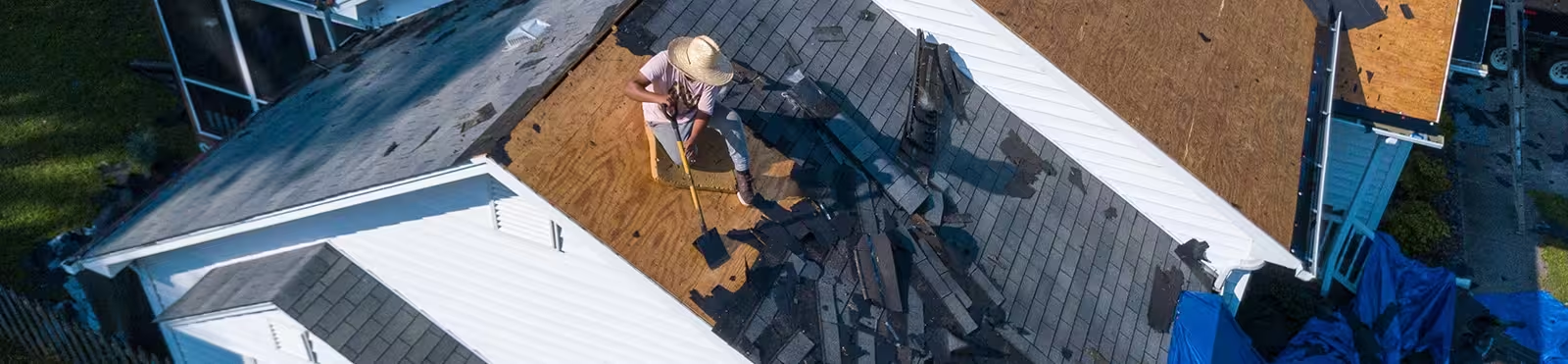
The best time to address roofing material quality is when the roof needs replacement anyway. The incremental cost difference between standard and Class 4 SBS shingles, or between Class 4 shingles and stone-coated steel, is much smaller when the labor and tear-off are already budgeted. For a current look at what those systems cost in Colorado, the replacement cost guide gives you a realistic baseline before you talk to anyone.
→ Colorado Roof Replacement Cost 2026: What Homeowners Actually Pay
The low-hanging fruit, vent protection, gutter maintenance, removing combustible materials from direct contact with the structure, can happen at any time for relatively modest cost.
Why do systems matter more than individual products?
The through-line of this series is that home hardening is a systems problem, not a product problem.
A Class A shingle on a poorly vented roof, with combustible material in the gutters and a wood deck attached at the wall, is less protected than a good assembly that addresses each of those pieces together. The weakest link matters, and the weakest link in most Colorado homes is rarely the roofing material itself.
Building a hardened home, or hardening an existing one over time, means thinking about each component and how they interact. Roof. Vents. Gutters. Siding. Deck connections. Fences. Landscaping. Each one is a piece of the picture.
The good news is that you don't have to address everything at once. Making smarter decisions as things need to be replaced, combined with a few targeted upgrades in the highest-priority areas, adds up over time.
That's the practical definition of home hardening. Not a single project. A smarter approach to the decisions you're already going to make.
Pak Exteriors is a roofing and exteriors company serving the Denver metro, Front Range, and mountain communities across Summit County, Eagle County, the Vail Valley, Grand County, and Pitkin County. We built this series because homeowners in Colorado deserve straight answers about what protects a home and what doesn't. If you're ready to talk through what any of this means for your specific home, we're here for that conversation.