

Next Up: Home Hardening Series Recap
Internal Link: Stone-Coated Steel Roofing in Colorado: A Long-Term Solution for Hail, Snow, and Energy Efficiency
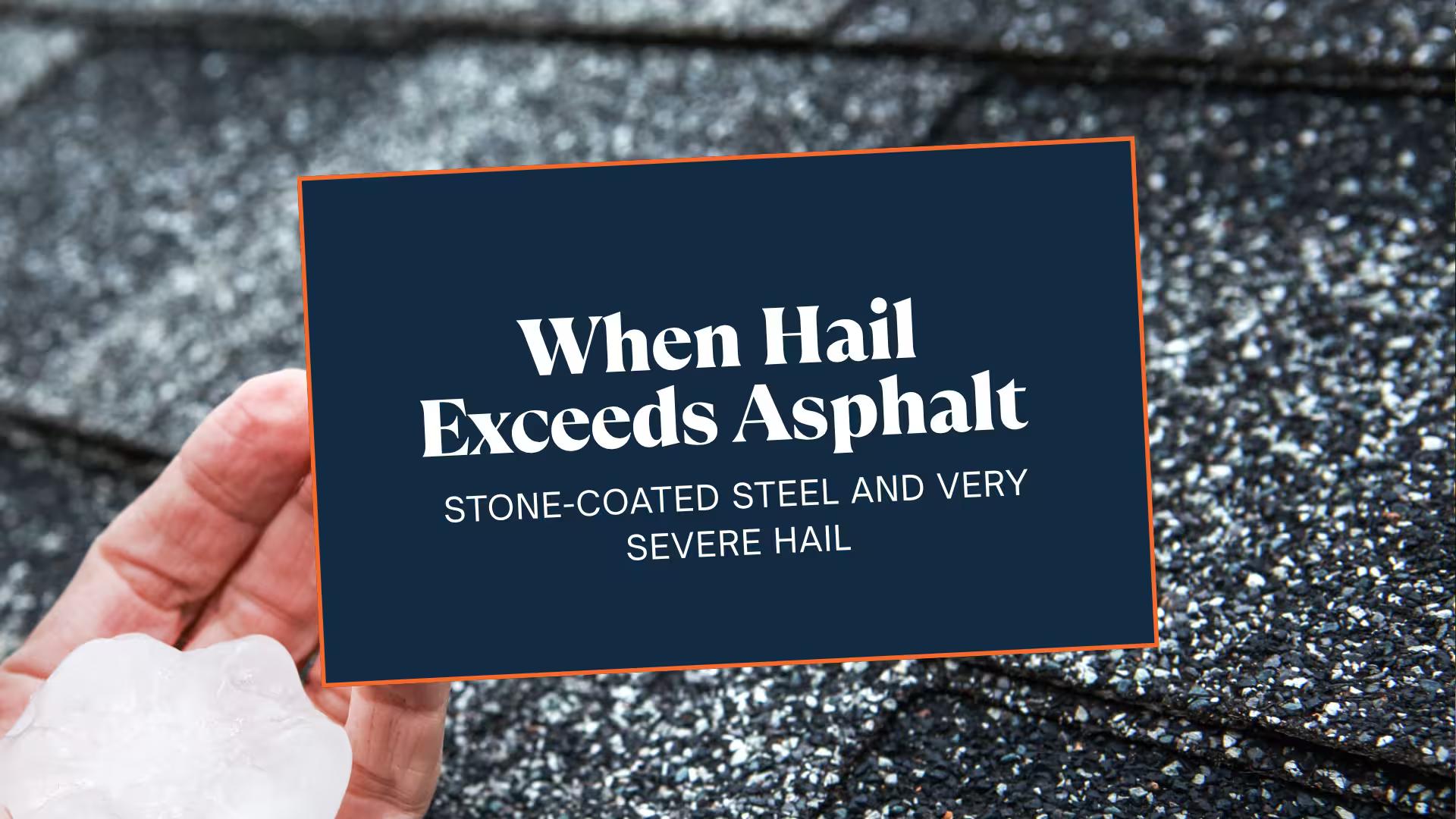
TLDR: Class 4 asphalt shingles are the standard recommendation for hail-resistant roofing in Colorado, but Class 4 was designed around hailstones up to two inches and the Front Range regularly sees larger. Stone-coated steel products carry Very Severe Hail ratings that asphalt products don't, along with service lives that change the long-term cost comparison significantly. This article explains when that matters and when standard Class 4 is probably enough.
Class 4 is the standard most people point to when talking about hail-resistant roofing in Colorado. And for the majority of hail events that hit the Front Range and eastern Colorado, it's a meaningful level of protection.
But Class 4 was designed around hailstones up to two inches in diameter. Colorado routinely produces hailstones larger than that, and when it does, the picture changes.
What does very severe hail actually mean?
Very severe hail, sometimes abbreviated VSH, refers to hailstones of two inches in diameter and larger. In Colorado, storms producing two-inch to three-inch or even larger hail are not unusual. The Front Range is one of the most active VSH zones in the country.
The FM Global standard evaluates roofing products specifically against these larger stone sizes. FM 4473 is the test standard, and it's considerably more demanding than UL 2218. Most asphalt shingles, including Class 4 products, do not hold up under FM 4473 testing conditions. The material simply doesn't have enough structural integrity to resist that level of impact without cracking or fracturing.
Where does stone-coated steel fit in the roofing landscape?
Stone-coated steel roofing is a different category of product entirely. It's a steel substrate, typically 26-gauge Galvalume or similar, coated with acrylic resin and embedded stone granules.
Steel, unlike asphalt, doesn't fracture under impact. It dents, but denting is structurally different from cracking. A dented steel panel still sheds water. A cracked asphalt shingle does not shed water the same way over time.
Stone-coated steel products from manufacturers like DECRA and Unified Steel are tested and certified to FM 4473. They pass very severe hail testing that asphalt products don't. In the most serious Colorado hail events, that difference in material behavior is what separates a roof that comes through intact from one that doesn't.
What is the service life argument for steel over asphalt?
Even a premium SBS-modified Class 4 shingle has a realistic service life of 25 to 30 years under good conditions in Colorado.
Stone-coated steel systems, installed correctly over a well-designed assembly, are engineered for service lives of 50 years or more. Most come with manufacturer warranties that run 50 years, with some products warranted for the life of the structure. Before comparing warranties, it helps to understand what roofing warranties actually cover and what they don't.
The installed cost of stone-coated steel is roughly double to triple what a premium asphalt shingle system costs. That number is real and it's worth being honest about. But the comparison that matters isn't what you spend today. It's what you spend over the time you own the home. If the asphalt system needs replacement in 20 to 25 years and the steel system is still performing at 40, the math looks very different. And that's before you factor in the storms the steel handled without a claim that the asphalt roof wouldn't have.
→ Colorado Roof Replacement Cost 2026: What Homeowners Actually Pay
→ Hail & Wind Insurance Claims: A Homeowner's Guide to Doing It Right
Does stone-coated steel also address fire risk?
Stone-coated steel carries a Class A fire rating as a material, not just as an assembly. Steel is non-combustible. There's no asphalt compound to ignite, no granule layer that can be disrupted to expose the underlying material.
In the WUI communities we work in, Summit County, Eagle County, the Vail Valley, fire resistance is not theoretical. A roof that handles both hail and fire threats without trading one off against the other is a genuinely different conversation. Combined with ember-resistant vent covers and careful detailing at penetrations, a stone-coated steel roof is one of the strongest contributions a homeowner can make to overall exterior resilience.
Are there energy efficiency benefits to steel roofing?
Steel roofs have thermal properties that asphalt doesn't. Most stone-coated steel installation systems include an elevated batten structure that creates an air gap between the panel and the deck. That gap acts as a thermal break, reducing how much heat transfers into the attic.
Colorado gets intense sun at altitude, more UV exposure than most homeowners expect given how cool it can feel. A roof that absorbs and retains less of that heat keeps the attic cooler, which reduces the load on HVAC systems through summer. Some homeowners notice a real difference in cooling costs after a steel installation. And because stone-coated steel weighs about the same as premium asphalt products, it typically goes over existing roof structures without needing additional reinforcement.
Is stone-coated steel the right choice for every home?
No. Stone-coated steel is a premium product at a premium price. It makes the most sense for homes in high hail frequency areas where the roof has been damaged multiple times, properties in WUI zones where both hail and fire risk are real concerns, homeowners who plan to stay in the home long enough to realize the service life advantage, and situations where lifetime cost of ownership is the relevant metric.
If you're not sure whether your home's situation justifies the investment, the Home Hardening Quiz assesses your overall risk profile and can help clarify whether premium systems belong in your plan.
→ Home Hardening Quiz
For a complete look at costs, installation, pros and cons, and which homes it makes the most sense for, the full stone-coated steel guide goes deeper on all of it.
→ Stone-Coated Steel Roofing in Colorado: A Long-Term Solution for Hail, Snow, and Energy Efficiency
When you're ready to talk to a contractor about any of these systems, going in with the right questions protects you.
→ 8 Questions to Ask Any Colorado Contractor Before You Sign