

TLDR: Home hardening is the practice of making your home more resistant to the two biggest threats Colorado homeowners face: wildland fire and hail. It's not one upgrade. It's a way of making smarter decisions over time about materials, construction details, and maintenance. This page explains the concept, why it matters more now than it used to, and links you to every article in the series so you can start with whatever is most relevant to your situation.
Home insurance in Colorado is changing. Premiums are rising, coverage is becoming harder to secure in some areas, and homeowners are being asked to shoulder more of the risk than they used to.
At the same time, a concept many homeowners have never heard of is becoming increasingly relevant.
It's called home hardening.
What is home hardening?
Home hardening is the practice of reducing how vulnerable a home is to damage from external threats like wildland fire, hail, and wind.
Rather than reacting after a loss, home hardening focuses on preventing ignition, reducing impact damage, limiting how far damage spreads when an event does occur, and reducing the likelihood of needing to file insurance claims in the first place.
It includes a combination of building materials, construction assemblies, maintenance habits, and landscaping. Home hardening does not mean a home is fireproof or hailproof. No home can be fully protected from extreme events. The goal is to reduce risk and disruption, not eliminate it.
Why does home hardening matter in Colorado right now?
Colorado faces a unique combination of risks, and the insurance response to those risks is changing how homeowners experience coverage.
Hailstorms are frequent and cause repeated roof, window, and siding claims across the Front Range. Wildfires are less common but far more destructive when they occur, as the Marshall Fire in Boulder County demonstrated in December 2021. Rebuilding costs continue to rise. And insurance carriers are responding by raising premiums, tightening underwriting, and increasing deductibles.
Many homeowners are discovering that even when damage occurs, filing a claim is no longer an easy or obvious decision.
How have higher deductibles changed the math for homeowners?
One of the biggest shifts homeowners are seeing is much higher deductibles, especially for hail and wind coverage. Many Colorado policies now carry percentage-based deductibles of two to three percent of the insured value, which on a $600,000 home means $12,000 to $18,000 out of pocket before insurance pays anything.
Higher deductibles are designed to reduce the number of smaller and moderate claims, shifting more responsibility to homeowners. For moderate damage events, the claim amount may barely clear the deductible, or filing may affect future premiums and renewability enough that it isn't worth it.
By reducing the likelihood and severity of damage in the first place, home hardening helps homeowners avoid filing claims for moderate damage, protect themselves from repeated deductibles, and reduce the disruption that follows every storm.
→ Why Higher Deductibles Are Changing How Colorado Homeowners Think About Claims
Does a well-hardened home make you a better insurance risk?
Insurance companies look at loss history and future risk, not just your current roof. Homes that experience fewer claims, use more durable materials, and are better protected against common loss events are generally viewed as lower risk over time.
While no upgrade guarantees lower premiums or specific discounts, homeowners who proactively reduce risk tend to be easier to insure, less likely to face non-renewal, better positioned when shopping for coverage, and more attractive candidates for broader coverage options.
The less often your insurance needs to be involved, the more flexibility you tend to have.
→ Why Home Insurance in Colorado Is Changing
What are the two biggest threats Colorado homes face?
Wildfire and ember exposure are one side of the equation. In many Colorado fires, homes aren't destroyed by a wall of flame. They're ignited by wind-driven embers that enter vulnerable areas like attics, roof assemblies, vents, deck connections, and gaps in siding and trim. Once embers enter the structure, ignition often occurs from the inside. Home hardening focuses heavily on reducing these entry points.
→ How Embers Destroy Homes in Colorado Wildfires
Hail is the most frequent driver of insurance claims in Colorado. While not every storm is severe, repeated impacts over time shorten roof life, increase the likelihood of claims, and expose homeowners to repeated deductibles. Home hardening addresses hail by focusing on durability and performance over decades, not just minimum impact ratings.
→ Hail Resistance in Colorado Homes: What the Ratings Mean and Why They Matter
What are the core components of a hardened home?
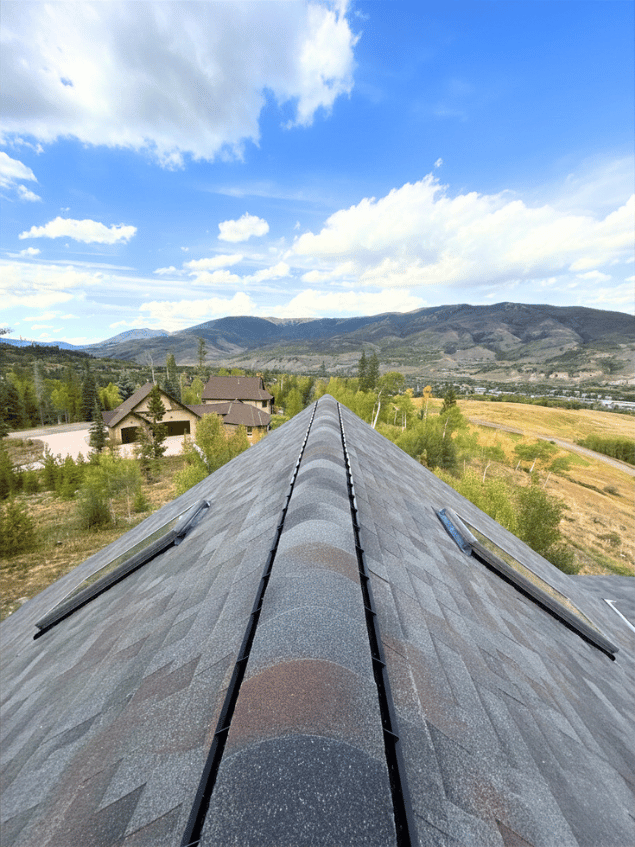
The roof is the largest exposed surface of your home and plays a major role in both fire and hail resistance. Important considerations include the fire rating of the full roof assembly, impact resistance and material flexibility, how the roof handles embers and debris, and long-term durability over replacement cycles.
Exterior walls are often overlooked in fire discussions. Siding choices affect ember behavior near the home, heat transfer into wall cavities, and how damage spreads from neighboring structures.
Ember intrusion through attic vents, soffit vents, and other openings is one of the most common ignition pathways in wildfire events. Ember-resistant venting is one of the most accessible and impactful upgrades available. And the first five feet directly adjacent to the structure, including ground cover, fencing, and deck connections, is disproportionately important in determining whether a home survives ember exposure.
→ Defensible Space vs Home Hardening: How They Work Together
→ What a Class A Fire Rating Really Means for Your Roof and Siding
How does hail resistance fit into home hardening?
Not all hail resistance is equal. Home hardening considers the full range from standard architectural roofing to Class 3 and Class 4 impact-resistant shingles to premium SBS-modified Class 4 products to roofing systems designed for very severe hail conditions.
Some systems designed for severe hail exposure also carry Class A fire ratings, extended service lives, and improved energy efficiency. For homeowners in areas where both threats are real, those systems represent a genuinely different value proposition.
→ When Hail Exceeds Asphalt: Stone-Coated Steel and Very Severe Hail
→ Stone-Coated Steel Roofing in Colorado: A Long-Term Solution for Hail, Snow, and Energy Efficiency
What can home hardening do, and what can't it do?
Home hardening can reduce ignition risk, reduce damage severity, reduce the frequency of insurance claims, minimize exposure to high deductibles, and improve long-term durability.
Home hardening cannot eliminate all risk, guarantee insurance savings, or prevent every type of damage. It is a strategy, not a promise. The goal is a home that handles Colorado's conditions better over time and gives you more options when something does happen.
Read the Full Home Hardening Series
Each article in this series covers one specific part of the home hardening picture. Start with whatever is most relevant to your situation. Every article stands on its own, but they build on each other if you read them in order.
Blog 1: What Is Home Hardening in Colorado?
The cornerstone article. Explains the concept, why Colorado faces unique risks, and how to think about hardening without pressure or panic.
→ What Is Home Hardening in Colorado?
Blog 2: Why Home Insurance in Colorado Is Changing
What's behind rising premiums, tighter underwriting, and coverage restrictions, and why it's not going away.
→ Why Home Insurance in Colorado Is Changing
Blog 3: Why Higher Deductibles Are Changing How Colorado Homeowners Think About Claims
How percentage-based deductibles work, what the math looks like after a storm, and why durable materials change the equation.
→ Why Higher Deductibles Are Changing How Colorado Homeowners Think About Claims
Blog 4: Defensible Space vs Home Hardening: How They Work Together
Two different strategies that address different parts of the wildfire risk picture. Neither is complete without the other.
→ Defensible Space vs Home Hardening: How They Work Together
Blog 5: What a Class A Fire Rating Really Means for Your Roof and Siding
What Class A actually tests, the difference between material and assembly ratings, and what else matters beyond the rating.
→ What a Class A Fire Rating Really Means for Your Roof and Siding
Blog 6: How Embers Destroy Homes in Colorado Wildfires
Where embers enter homes, why ignition often starts from the inside, and what vent hardening actually involves.
→ How Embers Destroy Homes in Colorado Wildfires
Blog 7: Hail Resistance in Colorado Homes: What the Ratings Mean and Why They Matter
A plain-language explanation of Class 1 through Class 4, SBS modification, and why service life matters more than any single storm.
→ Hail Resistance in Colorado Homes: What the Ratings Mean and Why They Matter
Blog 8: When Hail Exceeds Asphalt: Stone-Coated Steel and Very Severe Hail
What very severe hail actually means, where stone-coated steel fits, and when the premium is worth it.
→ When Hail Exceeds Asphalt: Stone-Coated Steel and Very Severe Hail
Blog 9: Home Hardening Series Recap: What You've Learned and Where to Start
Ties the full series together and tells you where to start based on your primary risk.
→ Home Hardening Series Recap: What You've Learned and Where to Start
Not sure where your home stands?
The Home Hardening Quiz takes about two minutes. It walks through your home's specific vulnerabilities across fire, hail, defensible space, and roofing materials, and gives you a score with a clear starting point.
You don't need to read the full series first. The quiz meets you where you are.
→ Home Hardening Quiz
Important: Home hardening strategies reduce risk but do not eliminate it. No material or upgrade can guarantee protection from wildfire, hail, insurance deductibles, or premium changes. Insurance premiums, deductibles, and underwriting decisions are determined by individual carriers. Speak with your insurance agent about your specific policy.