



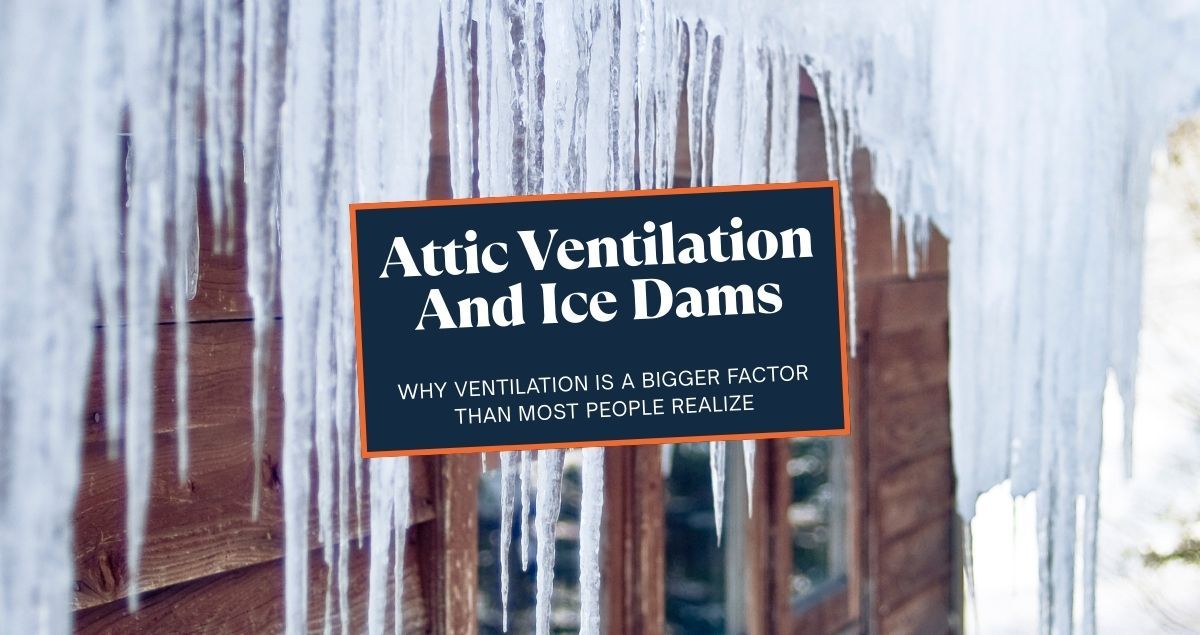

Ice dams are one of the most common and costly winter roofing issues in Colorado. They are also widely misunderstood.
TLDR: Ice dams form when heat escaping through the attic melts snow unevenly on the roof. While insulation helps, ventilation is equally important because it removes warm air before damage starts. Fixing ice dams without addressing ventilation leaves you vulnerable to the same problem next winter.
Many homeowners assume ice dams are caused solely by snow or that they are unavoidable in colder climates. The reality is more nuanced. Ice dams are influenced by a combination of exterior weather conditions and interior heat and airflow dynamics.
Understanding how attic ventilation fits into that equation is key to reducing ice dam risk and long-term damage.
What an Ice Dam Is and How It Forms
An ice dam forms when snow on a roof melts, flows downward, and then refreezes near the roof edge or eaves.
As this cycle repeats:
- Ice builds up along the roof edge.
- Meltwater backs up behind the ice.
- Water is forced under shingles and into the roof assembly.
Ice dams are not cosmetic. They can cause real damage to roofing materials, decking, insulation, drywall, and interior finishes.
The Role of Colorado Weather
Exterior conditions absolutely play a role in ice dam formation.
In Colorado, it is common to see:
- Heavy snowfall followed by warm, sunny days.
- Significant solar gain that accelerates snow melt.
- Rapid temperature drops at night that refreeze that meltwater.
Even on a properly built roof, these freeze-thaw cycles can contribute to ice formation. Sun exposure, roof orientation, and weather volatility all matter.
Ice dams can form even when outside temperatures remain below freezing if solar radiation warms the roof surface during the day.
Where Attic Heat Comes Into Play
While exterior conditions start the process, attic heat often compounds it.
Warm air naturally rises and escapes into the attic through:
- Inadequate insulation.
- Air leaks around lights, vents, and attic access points.
- Ductwork and mechanical systems.
When that heat reaches the underside of the roof deck, it accelerates snow melt from below. Now snow is melting from two sources, the sun above and heat from the attic below.
This is where ice dams become more frequent and more severe.
Why Attic Ventilation Matters
Proper attic ventilation helps regulate roof deck temperature by:
- Removing warm, moist air from the attic.
- Allowing colder outside air to replace it.
- Keeping roof temperatures more consistent across the entire roof plane.
When ventilation is balanced and airflow is continuous, attic heat buildup is reduced. That, in turn, reduces the amount of snow melt occurring from below the roof surface.
Ventilation does not eliminate exterior weather effects, but it significantly reduces the compounding impact of interior heat.
Common Ventilation Issues That Increase Ice Dam Risk
Several attic ventilation problems commonly contribute to ice dam formation:
- Exhaust without enough intake.
- Blocked or insufficient soffit intake.
- Exhaust vents placed at multiple heights.
- Mixed exhaust types short-circuiting airflow.
- Cathedral or vaulted ceilings without continuous airflow paths.
- Insulation packed tight to the roof deck with no air gap.
These conditions allow heat to build up unevenly, creating ideal conditions for ice dam formation.
Why Cathedral and Vaulted Ceilings Are More Vulnerable
As discussed in the previous article, cathedral and vaulted ceilings leave very little margin for error.
Because insulation and drywall sit directly beneath the roof deck:
- Heat transfer happens more quickly.
- Airflow is more restricted.
- Small ventilation gaps can create large temperature differences.
This is why homes with these ceiling types often experience recurring ice dams unless ventilation is intentionally designed for each rafter bay.
Ventilation Reduces Risk, It Does Not Guarantee Elimination
It is important to be realistic.
Proper attic ventilation can significantly reduce ice dam formation and, in some cases, eliminate it entirely. However, due to extreme weather patterns, roof geometry, and exposure, ice dams can still occur even on well-ventilated homes.
Ventilation is a critical layer of defense, but it is not the only tool.
When Heat Cable Systems Are Appropriate
In situations where ice dams persist despite proper ventilation and insulation, heat cable systems are often the best additional defense.
Heat cable systems:
- Create controlled melt paths at roof edges, valleys, and gutters.
- Prevent water from backing up behind ice.
- Are especially effective on complex rooflines, north-facing slopes, and shaded areas.
When installed correctly and paired with proper ventilation, heat cables significantly reduce the risk of water intrusion from ice dams.
This is where many homes benefit from a combined approach rather than relying on a single solution. Learn more about how heat cable systems work and where they make sense here.
Why Roof Replacement Is the Best Time to Address Ice Dam Risk
Roof replacement provides a rare opportunity to:
- Evaluate intake and exhaust balance.
- Correct blocked or missing intake.
- Install baffles in cathedral ceilings.
- Adjust vent placement based on real attic conditions.
- Integrate heat cable systems cleanly where needed.
Once the roof is installed, making these corrections becomes more invasive and more expensive.
What Homeowners Should Take Away
Ice dams are not caused by one single factor.
They are the result of:
- Exterior weather conditions.
- Solar exposure.
- Interior heat loss.
- Attic ventilation design.
- Roof geometry.
Proper attic ventilation plays a major role in reducing ice dam risk, but it works best as part of a complete system. When ventilation alone is not enough, heat cable systems provide an additional layer of protection.
A knowledgeable contractor should be able to explain how all of these factors interact on your specific home.
What Comes Next
Now that ice dams and ventilation are clearly connected, the next step is understanding how proper ventilation protects your roof and exterior materials over the long term.
Next in the series: How Proper Attic Ventilation Extends the Life of Your Roof and Exterior Products